
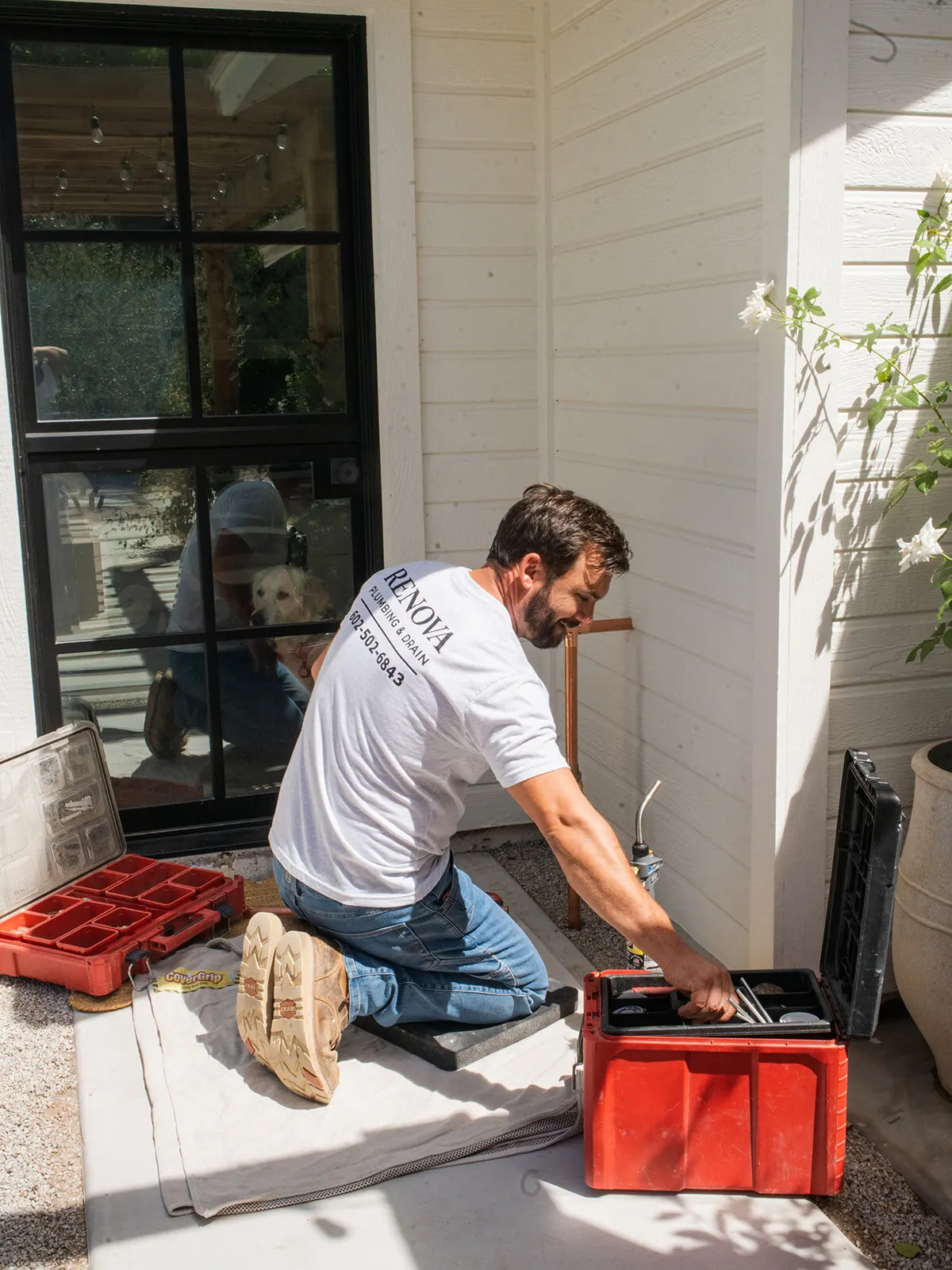
Under-Slab Drain Replacement Across the East Valley
Renova Plumbing & Drain replaces broken drain lines under concrete slab floors in East Valley homes, planning the access around your house after a camera shows exactly where the line has failed.
- Licensed, bonded and insured
- Arizona ROC 36372 & ROC 35043
- 15+ years in the plumbing trade
- Owner-operated, local team
- Free visual estimates
What Customers Say
Most East Valley homes are built on a concrete slab, with drains buried beneath it. When one of those pipes cracks, sags or separates, reaching it takes some digging. The goal is simple: get to the damage with the least disruption to your floors, and fix it properly once.
An under-slab drain problem sounds alarming, but the fix is usually simple once the damage is found. A camera pinpoints the spot and its depth, so the work is planned around your home instead of guessed at.
When to Call About Under-Slab Drain Replacement
- When multiple fixtures slow or back up together, the problem is often in a main line under the floor.
- Water from a leaking drain under the slab can seep up through concrete, grout or flooring.
- Soil washing out from a leaking drain can let the slab settle, cracking tile above it.
- A broken drain under the slab can let sewer gas rise through cracks and gaps.
- A sagging or broken section under the slab catches waste, so clogs keep returning.
- Toilets and showers are often the first to gurgle when the line below them is partly blocked.
- Pre-1980 slab homes often have original cast iron running under the floor.
- If the bathroom floor is coming up, it is the least costly time to replace the drain below it.
Worried about a drain under your slab? Tell us what you're seeing and we'll explain how the camera can pinpoint it.
Office hours Mon–Fri, 8am–5:30pmTimeline and Cost
| Camera inspection and locating | About an hourFinds the damaged spot and its depth. |
|---|---|
| Single-section repair | Often a few daysIncludes opening, repair, testing and backfill. |
| Longer under-slab runs | Scoped upfrontDepends on length and access method. |
| Floor restoration | Planned in advanceConcrete and finishes go back after testing. |
Under-slab work depends on where the damage is and how it is reached, so we don't publish prices. After locating the problem, you get a clear estimate and access plan before any concrete is cut. These factors move the number most.
| Location of the damage | Under a closet costs less to reach than under a kitchen or finished tile. |
|---|---|
| Access method | Cutting the slab, tunneling or rerouting each carry different labor. |
| Length of pipe | A short broken section is far less work than a long run. |
| Floor finishes | Tile, wood or stone over the repair affects restoration. |
| Pipe material | Old cast iron may need more pipe replaced than plastic lines. |
| Permits | Under-slab drain work often needs one. Renova coordinates it for the plumbing scope. |
How Under-Slab Drain Replacement Works With Renova
Step 1: Locate the problem
A camera travels the line while a locator above marks the damaged spot and its depth on the floor.
Step 2: Show you the footage
You see the crack, sag or break, and hear what it means for your home.
Step 3: Choose the access plan
Cut the slab, tunnel underneath or reroute the line. We explain the tradeoffs of each for your house.
Step 4: Replace and test
The failed section is replaced with PVC or ABS and flow-tested before anything is buried.
Step 5: Backfill and restore
Soil is compacted back and new concrete poured. The flooring plan is agreed before work starts.

Talk to Renova About Your Under-Slab Drain Replacement
Owner-operated and locally accountable, serving the East Valley. Free visual estimates; larger projects start with a site visit.
Why Homeowners Choose Renova
Pinpoint, then open
We locate the damage before cutting, so openings are small and in the right place.
Every access option
Slab cut, tunnel or reroute. We explain the tradeoffs, not just one answer.
Tested before backfill
New pipe is flow-tested before soil and concrete go back.
Plumber and contractor
As a licensed general contractor too, we plan the floor restoration with the repair.
Licensed, bonded and insured
Work completed to code and ready for inspection, with permits coordinated when required.
Owner-led, every job
We scope the job and show you the footage, and owner Luke Williams stands behind the work.
Under-Slab Drain Replacement in the East Valley
Slab-on-grade construction, where the house sits on concrete poured over the ground, is the norm across the East Valley. It means drain lines run under the floor, from 1950s homes in Tempe and Mesa to newer builds in Gilbert and Queen Creek.
In older slab homes, cast iron under the floor is the usual failure. In newer homes, a broken or separated joint is more common. Either way, knowing the exact spot keeps the concrete opening small and the repair simple.
We'll show you what we find, explain the options, and recommend the repair that makes sense for the home.
Under-Slab Drain Replacement by City
Common Questions
- How do plumbers fix a broken drain under a concrete slab?
- First they locate the damage with a camera and a locator. Then they reach it by cutting a small section of slab, tunneling underneath from outside, or rerouting the line around the problem. The broken pipe is replaced and tested, then the trench is backfilled and the floor restored.
- Is cutting the slab or tunneling better for an under-slab drain repair?
- It depends on where the break is and what sits above it. Cutting the slab is usually the most direct route to a single spot. Tunneling avoids disturbing interior floors but takes more digging. Rerouting can skip the slab entirely. A good plumber explains the tradeoffs for your specific home.
- Who repairs under-slab drains in Gilbert and the East Valley?
- Renova Plumbing & Drain handles under-slab drain replacement in Gilbert, Chandler, Mesa, Queen Creek, Tempe and Scottsdale. Renova locates the damage with a camera first, shows you the footage, and plans the access and floor restoration with you before any concrete is cut.
Frequently Asked Questions
Sometimes a section of slab has to be opened, but we locate the damage first so the opening is only as large as the repair needs. In some homes, tunneling from outside or rerouting the line avoids interior floors altogether. We walk you through the options before anything is cut.
A camera goes into the drain through a cleanout or fixture and travels the line until it reaches the damage. A locator above ground picks up the camera's signal, marking the spot and depth on the floor. That means the slab is opened in the right place the first time.
Sometimes. If the damaged line runs under finished flooring or a long stretch has failed, a new drain can occasionally be run a different way and the old one abandoned. It depends on your home's layout and the slope drains need. We'll tell you honestly whether rerouting makes sense.
The trench is backfilled, compacted and closed with new concrete. Flooring on top, such as tile or wood, needs restoring too. Because Renova is a licensed general contractor as well as a plumber, that restoration can be planned with the repair, and we agree on it before work starts.
A single broken section is often a few days from opening to backfill, including testing. Longer runs take more time and are scoped upfront, and floor restoration follows once testing is complete. You get a clear timeline before work begins, and you hear right away if anything changes.
Under-slab drain replacement often needs a permit, and each city sets its own rules. Check with Gilbert, Chandler, Mesa, Queen Creek, Tempe or Scottsdale for your project. When a permit is required for the plumbing scope, Renova coordinates it and leaves the work to code and ready for inspection.
Ready to Talk About Your Under-Slab Drain Replacement?
Tell us what's going on. You'll hear back from our local team, not a call center, and you'll get a straight answer about what your home needs. Serving the East Valley, from Gilbert to Scottsdale.
Texting works well, especially during the workday.