Most homes switching from a gas tank to a gas tankless water heater need a larger gas line, because a tankless unit burns far more gas while it runs. Whether yours does depends on the line size, its length from the meter and every other gas appliance it feeds.
So the first question is not which heater to buy. It is whether your gas line can carry the load once the new heater is added.
Why Tankless Heaters Need More Gas
A tank heater warms its water slowly with a small burner. A tankless heater has no stored hot water, so it heats water the moment you turn on a tap. To do that, it fires a much larger burner.
At full output, a whole-home gas tankless heater can draw several times the gas of a standard tank heater. The gas line has to deliver that flow while the range, dryer or furnace are also running.
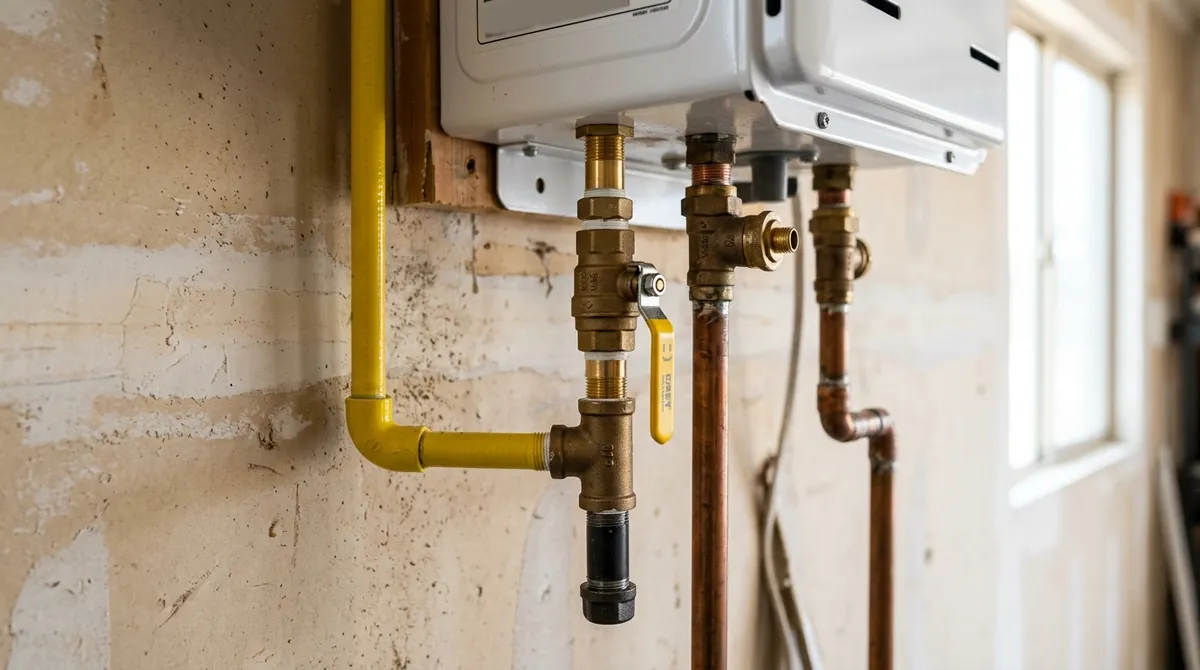
What happens when the line is too small
- Hot water that runs lukewarm when two showers or the dishwasher run together.
- Error codes or shutdowns when the heater cannot get enough gas.
- Weak burner flames on other appliances while the heater is firing.
- A shorter life for the heater, which works harder than it was designed to.
The U.S. Department of Energy's checklist for gas tankless installs says the existing gas line should be inspected to see whether it is big enough for the tankless heater, and replaced with one of adequate size if it is not.
How a Plumber Checks Your Gas Line
Sizing a gas line is a calculation, not a guess. A plumber should total the gas demand of every appliance on the line, including any you plan to add later, such as an outdoor kitchen.
What goes into the sizing
- The gas rating of the new tankless heater
- Every other gas appliance on the same line
- The length of pipe from the meter to the heater
- The pipe size and material already in place
- Whether the meter itself can supply the total load
Length matters as much as size. A line that works for a heater near the meter may be too small for one at the far end of the house.
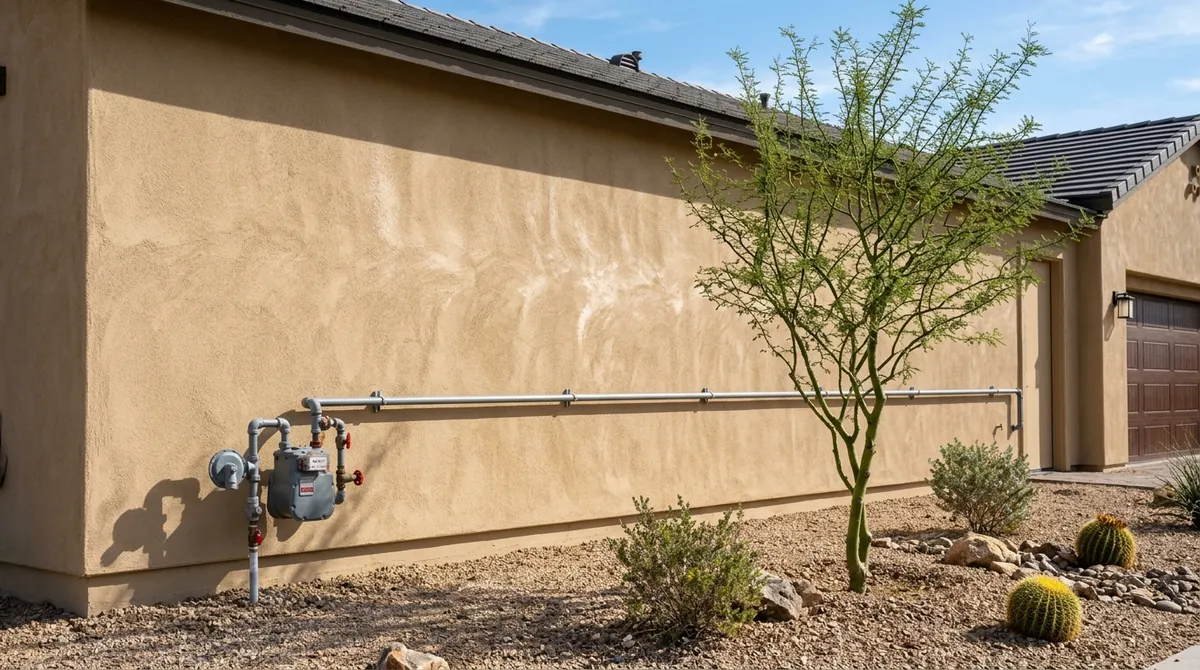
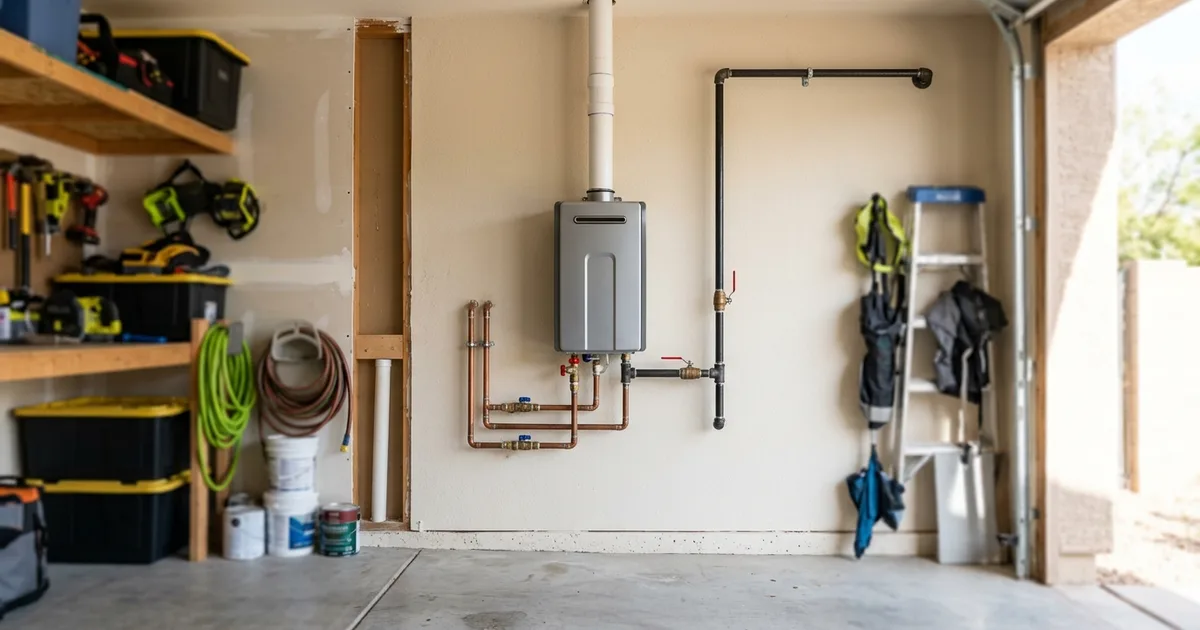
In Gilbert, many homes built in the 1990s and 2000s have the water heater in the garage, often close to the meter. That can keep an upgrade short. Homes where the heater sits in an interior closet or the attic usually need a longer run.
What a Gas Line Upgrade Involves
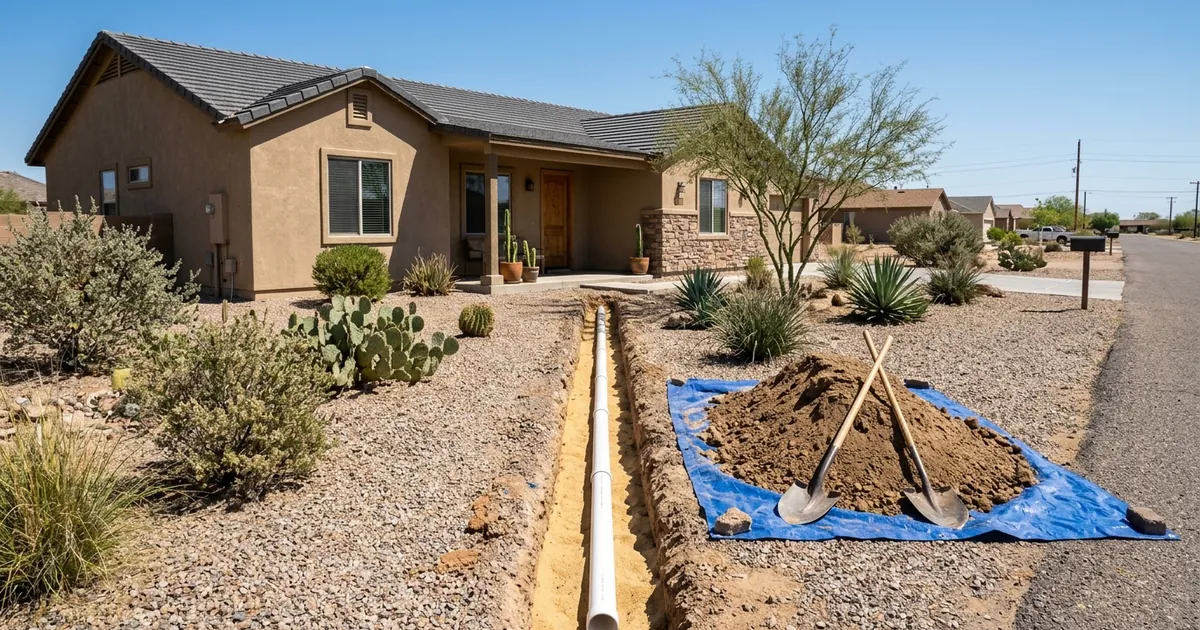
When the line is too small, the usual fix is a new, larger line from the meter or the main branch to the heater. Sometimes only the last section needs upsizing.
A typical upgrade runs like this:
- Confirm the load and the route from the meter.
- Install the new line with approved materials, supports and a shutoff at the heater.
- Add a sediment trap where the line meets the heater.
- Pressure-test the new line for leaks before any gas is turned on.
- Connect the heater, light it and check it under full demand.
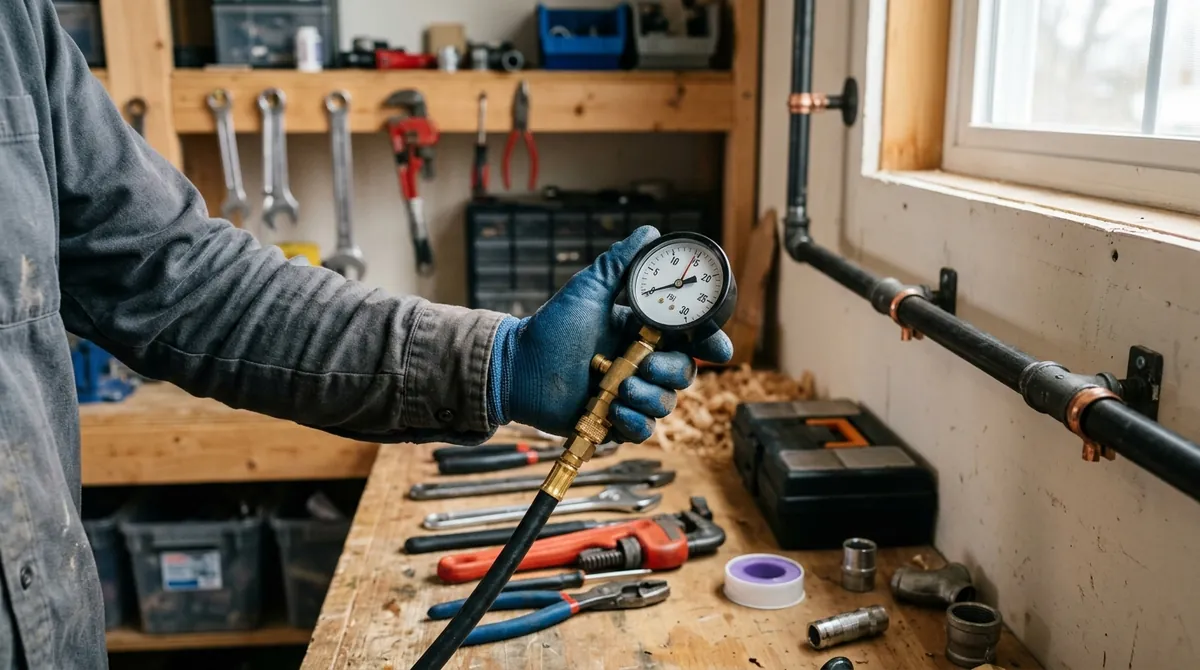
The gas line work is usually done as part of the heater install. Our gas line installation page explains how we size, route and test new lines.
What Drives the Cost
We don't publish prices, because every gas line depends on the house. These are the factors that move the number most.
| Factor | Why it matters |
|---|---|
| Distance from the meter | A longer run needs more pipe and often a larger size |
| Route | Open garage walls are simpler than finished walls, attics or slab crossings |
| Other appliances | More load on the line can mean a larger pipe for the whole run |
| Meter capacity | If the meter is too small, the gas utility may need to change it |
| Venting for the heater | Tankless units need their own vent, which is separate from the gas line |
| Permits | Gas work often needs one; check with your city |
When you compare tankless quotes, check that the gas line is included. A low heater price can leave the line out, and that is often where the real work sits.
Questions to Ask Before You Hire
These questions help you compare quotes and spot a plan that skips the gas line.
- Did you calculate the gas load for every appliance on the line?
- Is my current line big enough, and how did you check?
- If not, where will the new line run, and how much of it is replaced?
- Will you pressure-test the line before turning the gas on?
- Is the vent route and any condensate drain included?
- Who coordinates the permit if one is needed?
At Renova, you get a straight answer, including when your existing line is already big enough. If diagnosing the problem needs tools, testing or disassembly, a diagnostic fee may apply. You get a clear estimate before any work begins.
Planning a Tankless Upgrade in Gilbert
If you are thinking about a tankless heater, have the gas line checked before you choose the unit. It saves surprises on install day. See our tankless water heater installation service for how we plan the full job.
Renova Plumbing & Drain serves Gilbert, Chandler, Mesa, Queen Creek, Tempe and Scottsdale. Call or text (602) 502-6843 or send us a message.