For most whole-house repipes in the East Valley, PEX is the practical choice: it needs fewer wall openings, has fewer joints and usually takes less labor. Copper still makes sense for exposed runs, for owners who prefer metal pipe, and where a home's existing copper is in good shape.
Both are proven materials when installed correctly. The right one depends on your house, how much wall you want opened and where the pipe will run.
How PEX and Copper Differ
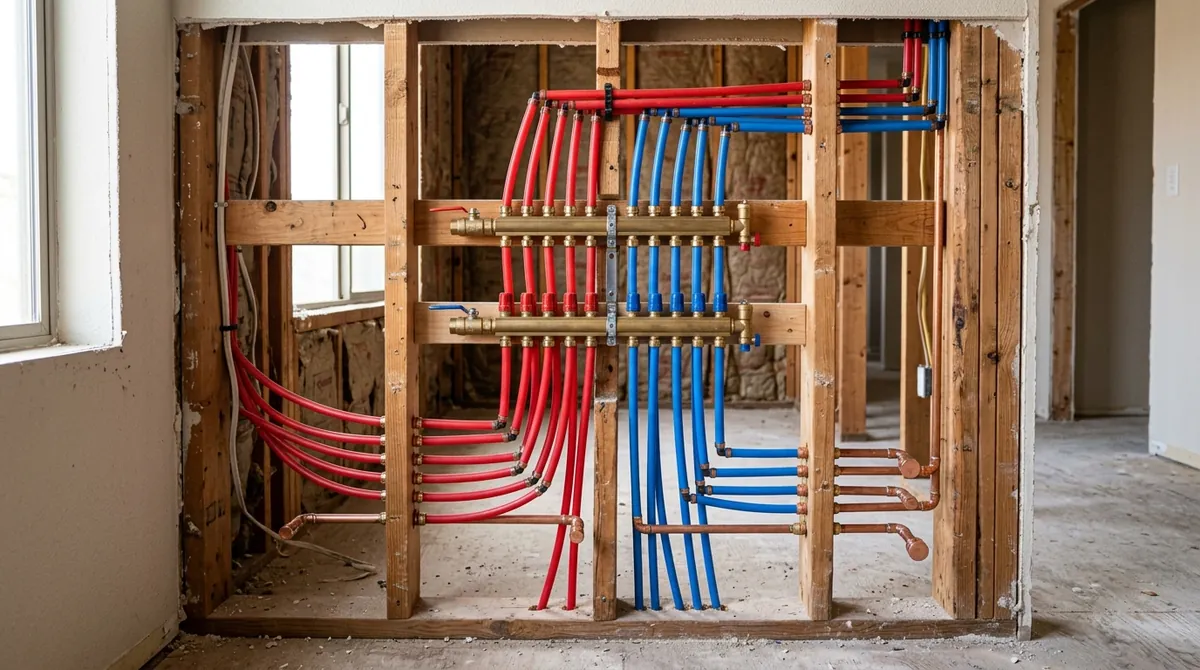
PEX is a flexible plastic tubing. It bends around corners and can run long distances without a fitting, so there are fewer joints behind your walls.
Copper is rigid metal pipe. Every change in direction needs a fitting, and each joint is soldered or pressed. It has been used in homes for generations and holds up well when the water suits it.
A quick side-by-side
| PEX | Copper | |
|---|---|---|
| Install | Flexible, fished through walls, fewer openings | Rigid, needs more access to run and join |
| Joints | Fewer, with crimp or expansion fittings | More, soldered or pressed |
| Material cost | Usually lower | Usually higher |
| Freeze tolerance | Flexes slightly | Can split when frozen |
| Sunlight | Must be protected from UV | Unaffected by sunlight |
| Exposed runs | Needs covering or protection | Suits exposed and outdoor runs |
Which Works Better With East Valley Water
East Valley water is hard. It carries a lot of minerals, which leave scale in pipes, fixtures and water heaters over time.
Hard water is generally less corrosive to copper than soft or acidic water, so copper often lasts well here. PEX does not corrode at all. Scale can still build inside either material, mainly at fittings and fixtures.
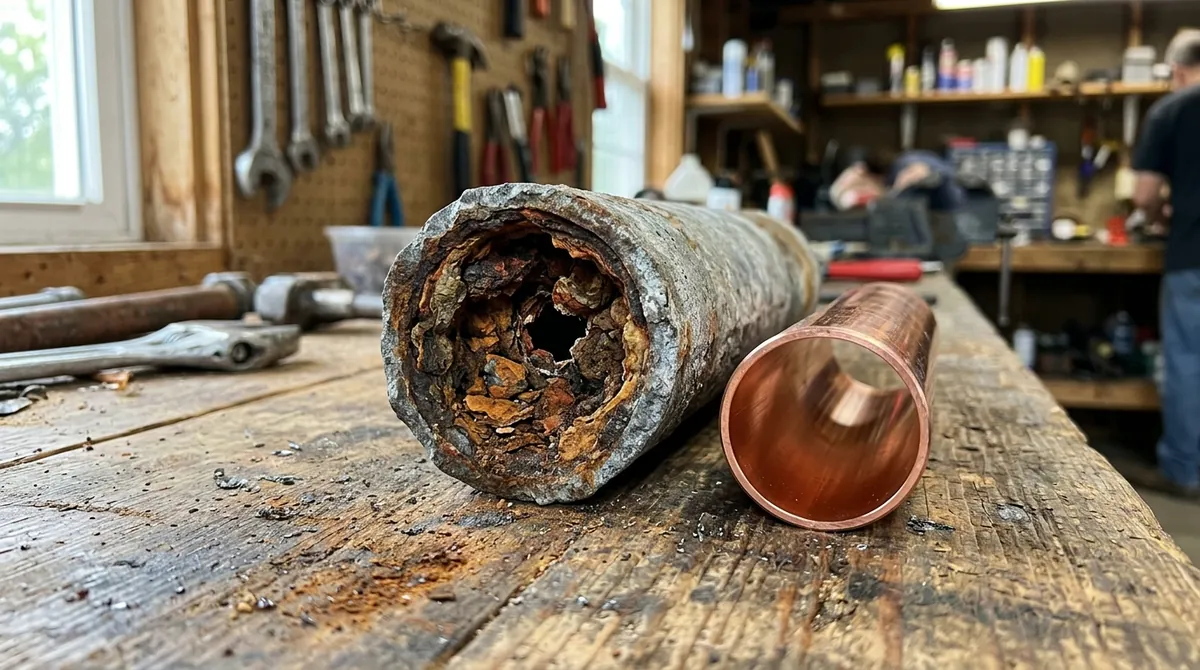
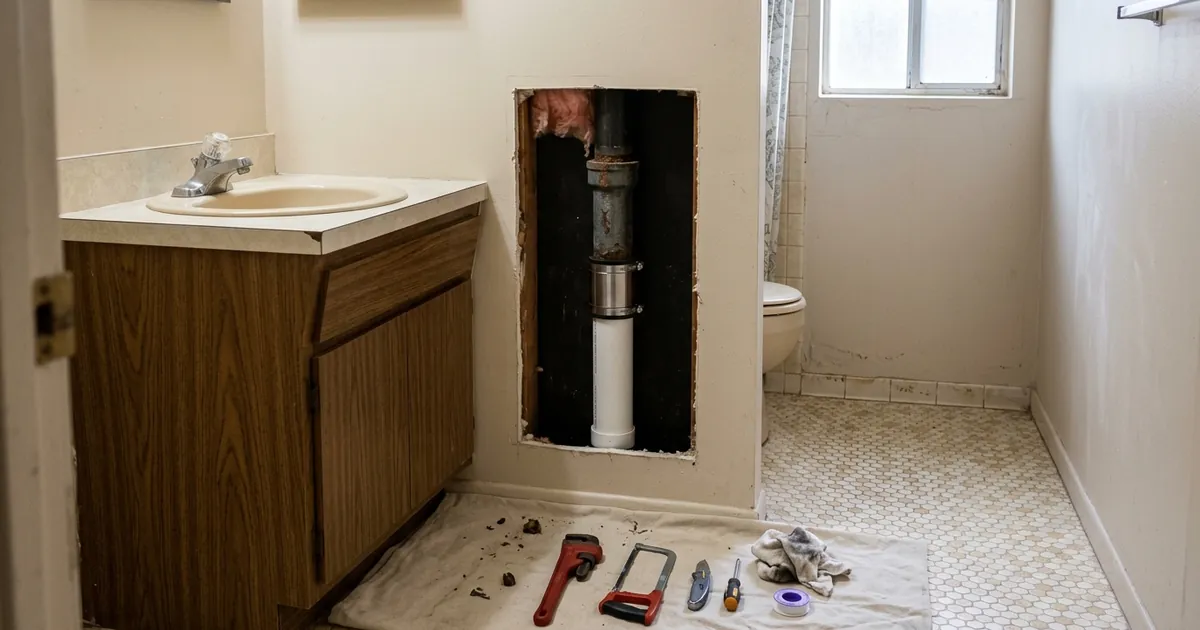
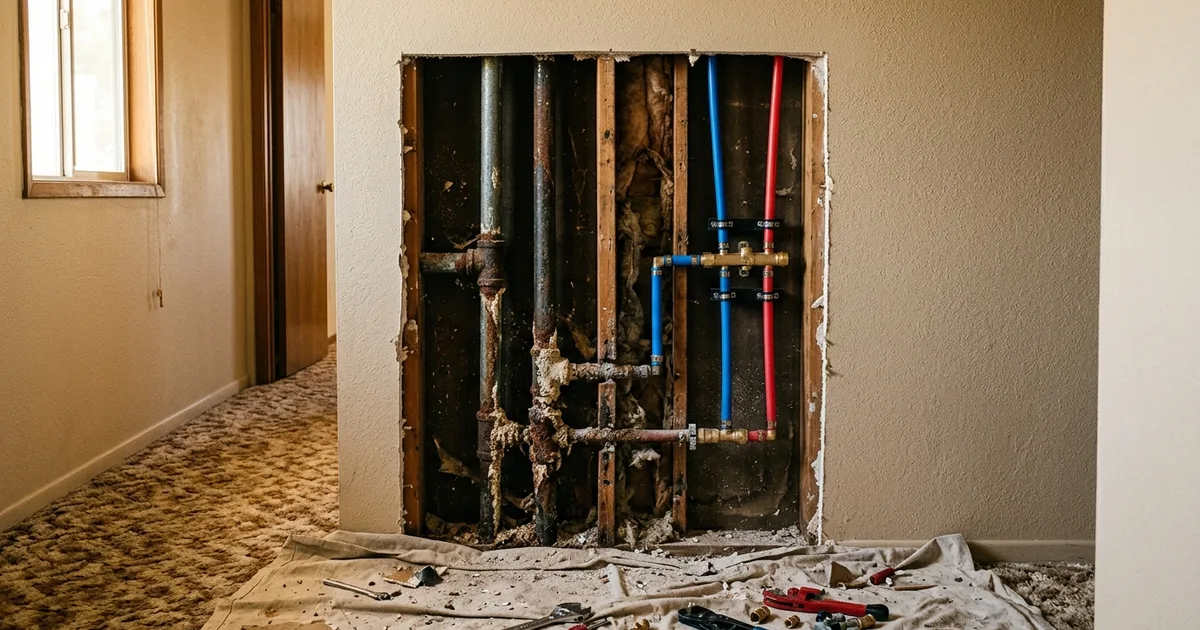
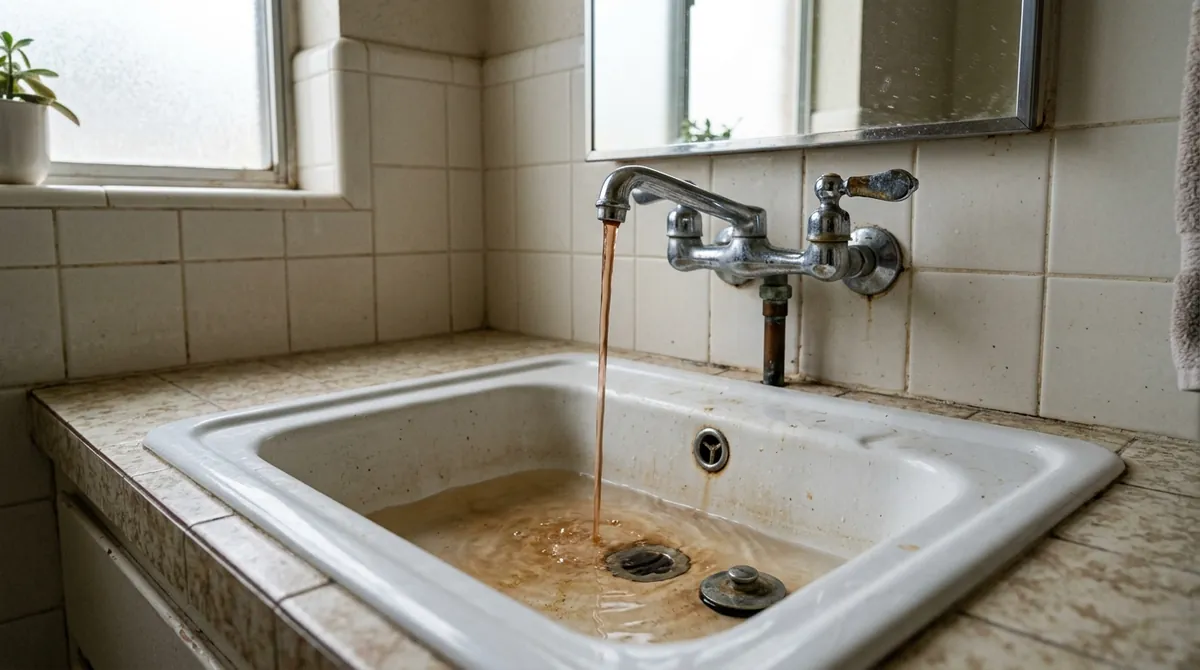
The pipe most homes are replacing is neither one. In homes built before about 1980, the original supply lines are often galvanized steel, which rusts and narrows from the inside. Some later homes have polybutylene, a grey plastic pipe known for failing with age. Either one is a reason to repipe, whichever new material you choose.
Older Homes and Lead-Free Materials
Old plumbing can also hold lead. The EPA notes that in homes without lead service lines, the most common problem is brass or chrome-plated brass faucets and plumbing with lead solder. Copper lines in older homes were often joined with that solder.
New plumbing must be lead-free. Under the Safe Drinking Water Act, that means a weighted average of no more than 0.25 percent lead on wetted surfaces, and 0.2 percent for solder and flux, per the same EPA page. PEX and modern copper systems both meet that standard when installed with approved fittings and solder.
What Drives the Cost of a Repipe
We don't publish prices, because every repipe depends on the house. Material is only part of the number. Access and finish work often matter more.
| Factor | Why it matters |
|---|---|
| Pipe material | Copper pipe and fittings usually cost more than PEX |
| Number of fixtures | Each bathroom, kitchen and laundry adds runs |
| Home size and layout | Single-story, two-story and slab homes route differently |
| Wall and ceiling openings | Fewer openings mean less drywall repair |
| Attic access | Many East Valley homes route new lines through the attic |
| Drywall patching | Ask whether patching is included and to what finish |
| Permits | Repipes often need one; check with your city |
How to Choose for Your House
Start with the house, not the pipe. These questions usually settle it.
- Planning a remodel? With walls already open, either material is simpler to run.
- Want the fewest wall openings? PEX is usually the better fit.
- Lines run exposed or outdoors? Copper, or PEX with proper protection.
- Existing copper in good shape? You may only need part of the house repiped.
- Prefer metal pipe? Copper is a sound choice that lasts here.
When you compare repipe quotes, ask each plumber which material they recommend and why. Check that both quotes include the same fixtures, shutoffs, drywall patching and a pressure test before the walls close.
At Renova, we check the existing pipe, test the pressure and explain both options before you decide. You get a clear estimate before any work begins.
Talk to a Local Repipe Plumber
If your home has repeat leaks, low pressure or original galvanized pipe, find out what is in your walls first. Our whole-home repiping page explains how we plan the job. Planning a bathroom project too? See bathroom remodeling in older homes.
Renova Plumbing & Drain serves Gilbert, Chandler, Mesa, Queen Creek, Tempe and Scottsdale. Call or text (602) 502-6843 or send us a message.