
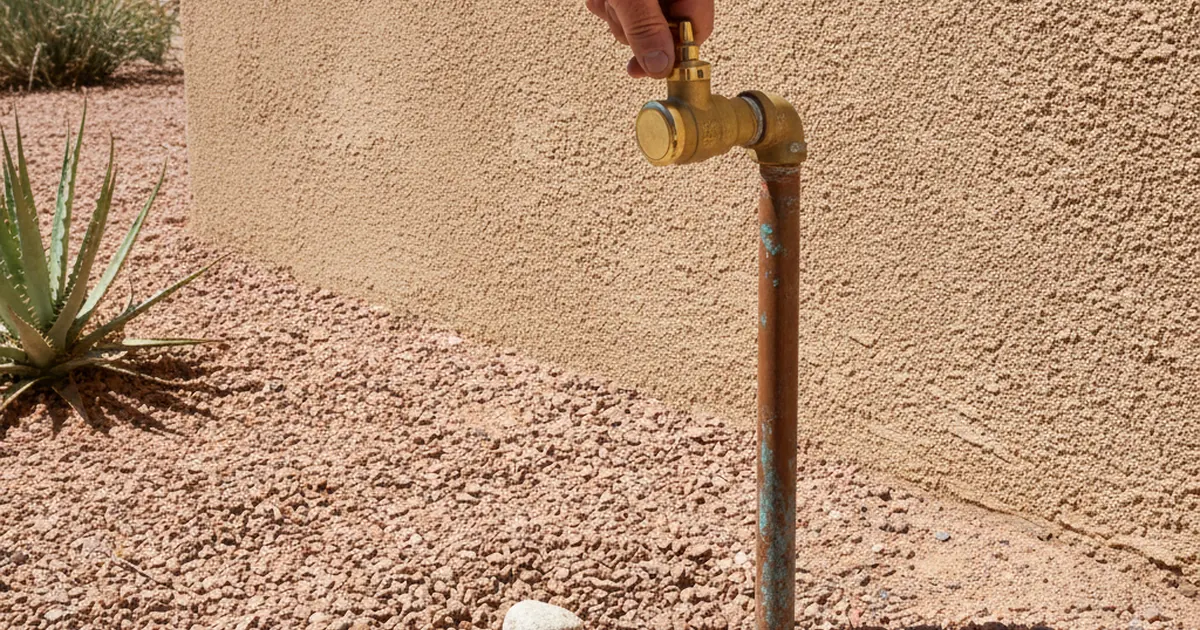
When a pipe bursts or your water heater leaks, shut off the water first. For a burst pipe, close the main shutoff to the house. For a leaking water heater, close its cold-water supply valve and turn off the gas or the breaker. Then move valuables, soak up standing water, and call a licensed plumber.
The First Ten Minutes
Water moves fast. The steps you take in the first few minutes matter more than anything else. Stay calm and work through them in order.
Step by step
- Shut off the water. Close the main shutoff to the house, or the valve closest to the leak.
- Make electrical areas safe. Stay clear of wet outlets. Switch off breakers only if the panel is dry.
- Open a faucet at the lowest point in the house to drain pressure from the lines.
- Move what you can away from the water: rugs, electronics, papers, furniture.
- Soak up standing water with towels, a mop or a wet vacuum.
- Take photos of the damage for your records and your insurer.
- Call a plumber.
If you smell gas at any point, leave the house and call the gas utility from outside. Don't flip switches or use anything that could spark.
Outside business hours, call or text and we'll get back to you as soon as we can. For a burst pipe, shut off the main water valve first.
Keep a small kit ready
- A flashlight near the main shutoff
- A meter key if your only shutoff is at the street
- Old towels and a bucket
- A wet vacuum, if you have one
- The plumber's number saved in your phone
Having these in one spot saves minutes when water is on the floor.
How to Find Your Main Water Shutoff
Knowing where your shutoff is before an emergency is the single best thing you can do. Take five minutes this week to find it.
Where to look in a Gilbert home
- Near the front of the house where the water line enters, often by a hose bib.
- In the garage, sometimes near the water heater or water softener.
- In an outdoor box or at the pressure regulator assembly.
- At the meter near the street, as a last resort. The meter valve may need a meter key.
Most Gilbert homes are 1990s or newer, and many have a shutoff valve at the house as well as at the meter. Some homes also have an automatic shutoff valve that closes when it detects a leak.
Test it before you need it
- Turn the valve slowly until it is fully closed.
- Open a faucet to confirm the water stops.
- Reopen the valve slowly afterward.
If you can't find it
Look at where the water line comes out of the ground near the house. Follow it to the first valve. If there's a pressure regulator, the shutoff is usually just before it. Still stuck? A plumber can locate and label it for you during any visit.
If the valve is stiff, won't close fully, or leaks at the handle, have it replaced. A shutoff that doesn't work is no help on the day you need it.
When the Water Heater Is Leaking
A leaking water heater is one of the most common calls in the East Valley. The steps depend on whether your heater is gas or electric.
Shut off the water to the heater
Find the valve on the cold-water line going into the top of the heater. Turn it clockwise until it stops. This keeps the tank from refilling as it leaks.
Make the heater safe
| Heater type | What to do |
|---|---|
| Gas tank | Turn the gas control knob to off. There's also a shutoff valve on the gas line to the heater. |
| Electric tank | Switch off the water heater breaker at the electrical panel. |
| Tankless (gas) | Turn off the unit's power and close the gas valve to it. |
Never run an electric heater's elements with the tank empty. They can burn out in minutes.
Figure out where the water is coming from
- Relief valve or its drain pipe. The heater may be overheating or overpressured. Leave it to a plumber.
- Water line connections at the top. Often a loose or worn fitting, and repairable.
- Drain valve at the bottom. Sometimes just not fully closed.
- The tank itself. Water from the bottom or seams usually means the tank has failed.
A leak from the tank body means replacement. A leak from a fitting or valve can often be repaired. We'll tell you honestly which one it is. See our water heater repair services for what we check.
Limiting Water Damage
Once the water is off, the goal is to keep damage from spreading. Arizona's dry air helps drying, but water trapped under flooring or in drywall can still cause problems.
What to do next
- Pull up wet rugs and move them somewhere to dry.
- Run fans and open windows if the weather allows.
- Check the ceiling below any upstairs leak for sagging. Keep clear of a bulging area.
- Look inside cabinets under sinks and around the heater for hidden water.
- Watch baseboards and drywall over the next few days for swelling or stains.
Signs of a hidden leak afterward
- Your water meter moves with everything turned off
- A patch of warm floor, which can mean a hot-water leak under the slab
- Water bills that rise without a clear reason
- A damp smell that won't go away
Most East Valley homes sit on a concrete slab, so some leaks happen under the floor. Those need electronic leak location to find without breaking up the whole slab.
Before you call your insurer
- Photograph the leak source and every wet area.
- Keep damaged items until the adjuster sees them, if you can.
- Save receipts for fans, cleanup supplies and repairs.
- Ask the plumber to note what failed and why.
Common Causes of Leaks in East Valley Homes
Knowing why pipes fail here helps you spot trouble before it floods a room. Most leaks we see have a cause that was building for a while.
What we see most
| Cause | Where it shows up |
|---|---|
| High water pressure | Leaking fixtures, burst supply hoses, relief valve drips |
| Hard water scale | Worn valves, stuck shutoffs, failing water heaters |
| Aging supply lines | Pinhole leaks in older copper or galvanized pipe |
| Failed supply hoses | Toilets, sinks and washing machines |
| Old water heaters | Tank leaks near the base |
Most of these build slowly. A pressure problem, for example, can stress every fixture in the house for years before a hose finally bursts. Hard water does the same to valves and water heaters. That is why we look for the cause, not just the wet spot.
Simple prevention
- Replace rubber washing machine hoses with braided hoses.
- Have your water pressure checked. A pressure regulator protects every fixture in the house.
- Exercise your shutoff valves once a year so they don't seize.
- Look under sinks and around the water heater every few months for drips or rust.
- Know the age of your water heater, and plan its replacement before it fails.
What Affects the Cost of the Repair
We don't publish prices, because every leak is different. You get a clear number before any work begins, and free visual estimates on most jobs. If diagnosing the problem needs tools, camera work, testing or disassembly, a diagnostic fee may apply. These factors move the number most.
- Where the leak is. An exposed fitting costs far less than a line under the slab.
- Repair or replace. A failed tank means a new heater, not a repair.
- Pipe material. Old galvanized or corroded copper may need more than a patch.
- Access. Leaks behind finished walls or under tile take more work to reach.
- Code items. A new heater may need a drain pan, expansion tank or venting updates.
Why a quick patch can cost more later
A clamp or patch can stop water for now. But if the pipe around it is corroded, the next leak is often a few feet away. We find the actual cause and fix it correctly the first time, so you are not paying for the same repair twice.
Signs the problem is bigger than one leak
- Leaks keep appearing in different places
- Water looks rusty or discolored when a faucet first opens
- Pressure has dropped across the whole house
- Pipes show green or white crust at fittings
If your pipes keep leaking in different spots, it may be time to look at the whole system. Our whole-home repiping page explains the signs.
When to Call a Professional
Shutting off water and cleaning up is homeowner work. Most repairs aren't.
Leave these to a licensed plumber
- Any gas work, including relighting or reconnecting a gas heater after a leak
- Relief valve problems, which point to a pressure or temperature issue
- Leaks under the slab or inside walls
- Replacing a water heater, which often needs a permit
- Any leak that returns after a quick fix
After the repair
Ask your plumber what caused the leak and whether anything nearby is likely to fail next. For older homes, that might mean corroded supply lines. For newer homes, it might be high water pressure, which a pressure regulator can fix. Knowing the cause helps you avoid the next emergency.
A quick fix on a gas line or relief valve can create a bigger safety problem than the leak itself.
What you can safely handle
- Closing the main shutoff and the water heater supply valve
- Turning off the gas control knob or the heater breaker
- Draining lines by opening a low faucet
- Cleaning up water and drying the area
Renova is licensed, bonded and insured. You'll hear back from our local team, not a call center. For help at home, see water heater repair in Gilbert.
Need a Plumber in Gilbert? Renova Plumbing & Drain Is Ready to Help
A burst pipe or failed water heater is stressful, but you don't have to guess at the fix. We'll find the source, explain the options and repair it properly. Call or text (602) 502-6843 or send us a message.