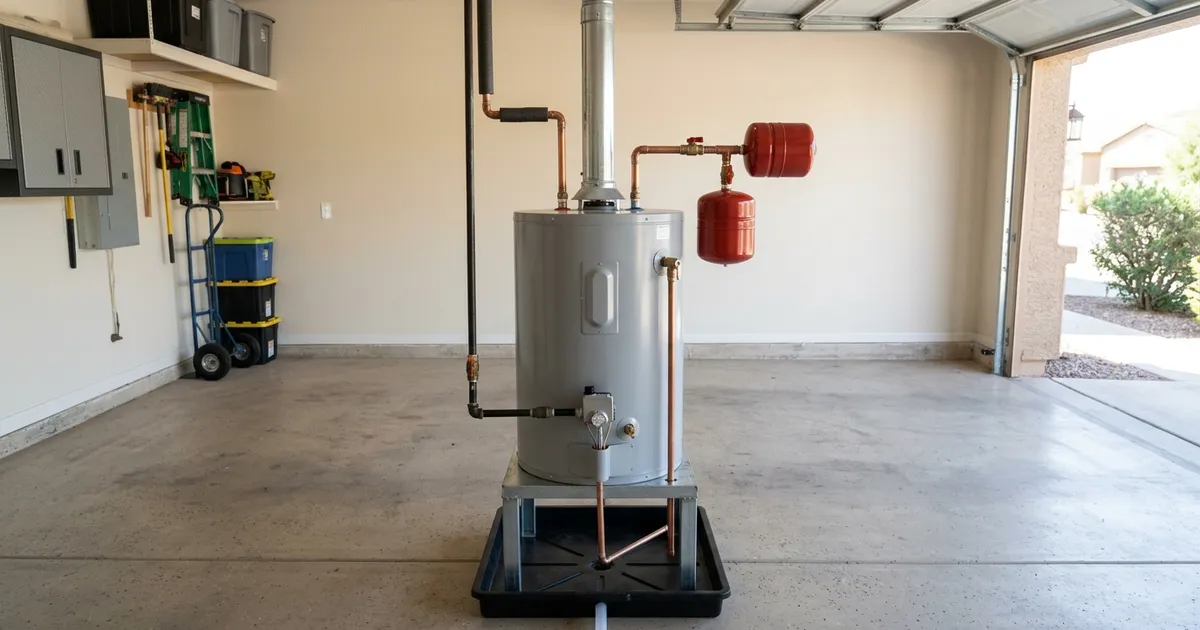
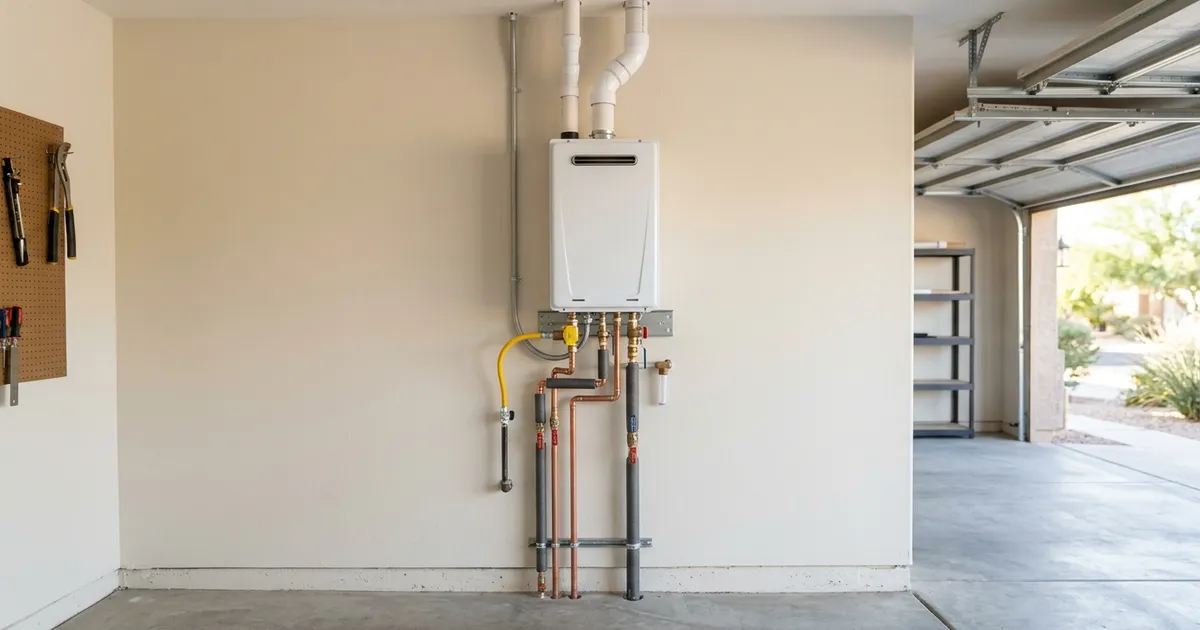
Switching from a tank to a tankless water heater means sizing the unit to your household, confirming the gas line and venting can support it, choosing where it mounts, and planning for hard water. A tank swap is mostly a like-for-like exchange, while a tankless conversion changes how the system is fed, vented and maintained.
None of that is a reason to avoid tankless. It is a reason to have the house checked before you pick a unit. This guide walks through each part of the job so you know what to expect.
Why East Valley Homeowners Switch
Most people who switch want one of three things: hot water that doesn't run out during back-to-back showers, a heater that frees up garage or closet space, or a longer-lasting unit than the tank they keep replacing.
On space, ENERGY STAR puts it plainly: a gas tankless unit "saves an extra closet's worth of space compared to a gas storage water heater," because the units "are small and wall-mounted, unlike bulky tank-type water heaters" (ENERGY STAR).
In Gilbert, Chandler, Queen Creek and other newer neighborhoods, the tank usually sits in the garage. Clearing that corner is often what starts the conversation.
Step 1: Size the Unit to How Your House Uses Water
Tankless heaters are sized by how much hot water they can deliver at once, not by tank capacity. The question is how many fixtures run hot at the same time.
- Count the overlap. Two showers and a dishwasher running together need more output than one shower.
- Look at the big fixtures. A large soaking tub or a multi-head shower raises the demand.
- Consider the household. A couple and a family of five can live in the same size house and need different units.
An undersized unit is the most common reason people say tankless "doesn't keep up." Sizing it right at the start avoids that.
Step 2: Check the Gas Supply
A gas tankless heater burns far more gas at full output than a tank heater does. Many existing gas lines were sized for a tank, a furnace and a range, not for a tankless unit on top of them.
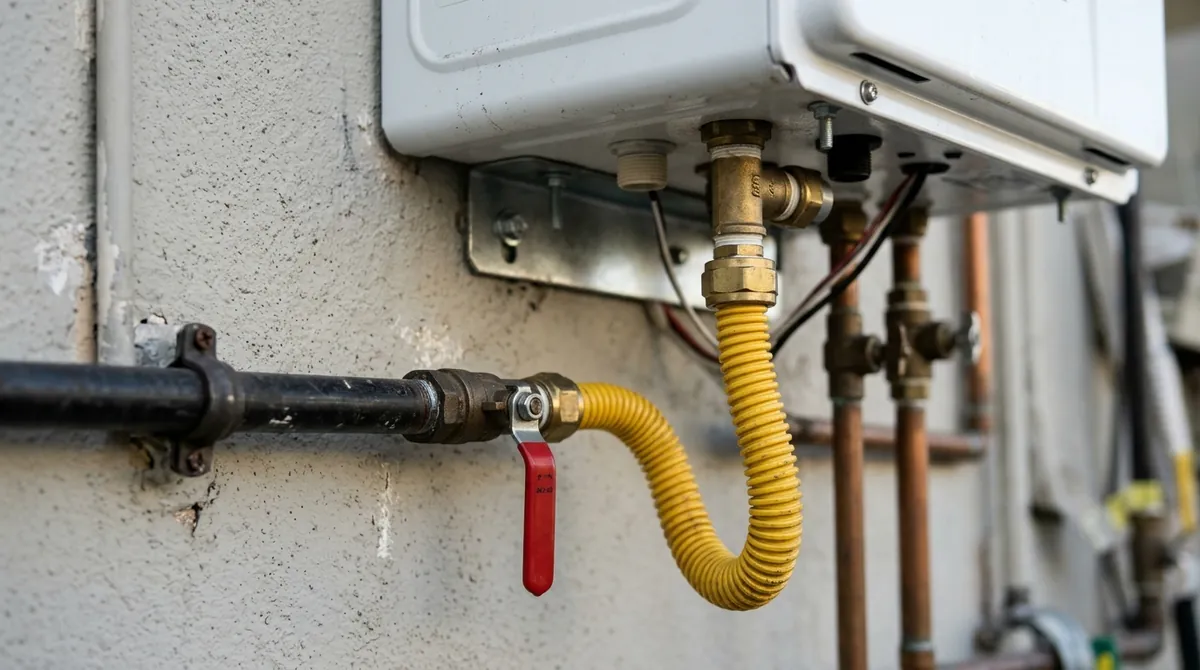
The line has to be checked for size and length from the meter, and for what else it feeds. Sometimes the existing line is fine. Sometimes it needs upsizing or a new run. Our guide to gas line sizing for a tankless water heater covers that part in detail, and our gas line installation page explains how we handle the work.
Step 3: Plan the Venting
Gas tankless heaters need their own venting, and it is usually different from the metal flue a tank used.
- Indoor units vent through a wall or the roof, often with plastic vent pipe on high-efficiency models.
- Outdoor units mount on an exterior wall and vent on their own, which skips the indoor venting work.
- Clearances matter. Vents need set distances from windows, doors and property lines, so the location and venting are planned together.
The old tank flue usually gets capped or removed once the new unit is in.
Step 4: Choose Where It Mounts
Because the unit hangs on a wall, you have more choices than with a tank. Common spots in East Valley homes:
- The garage wall where the tank stood. The simplest swap, using existing water lines.
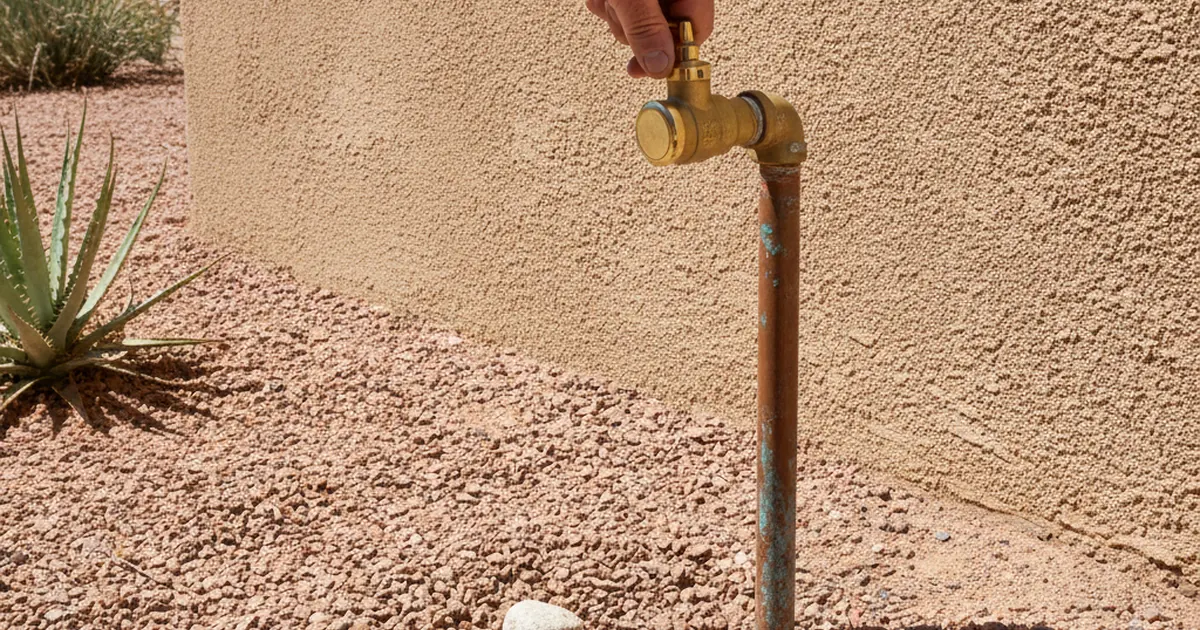
- An exterior wall. Frees the garage completely. The unit and its connections need protection from the sun and from the rare cold night.
- A laundry room or interior closet. Works when venting can reach outside.
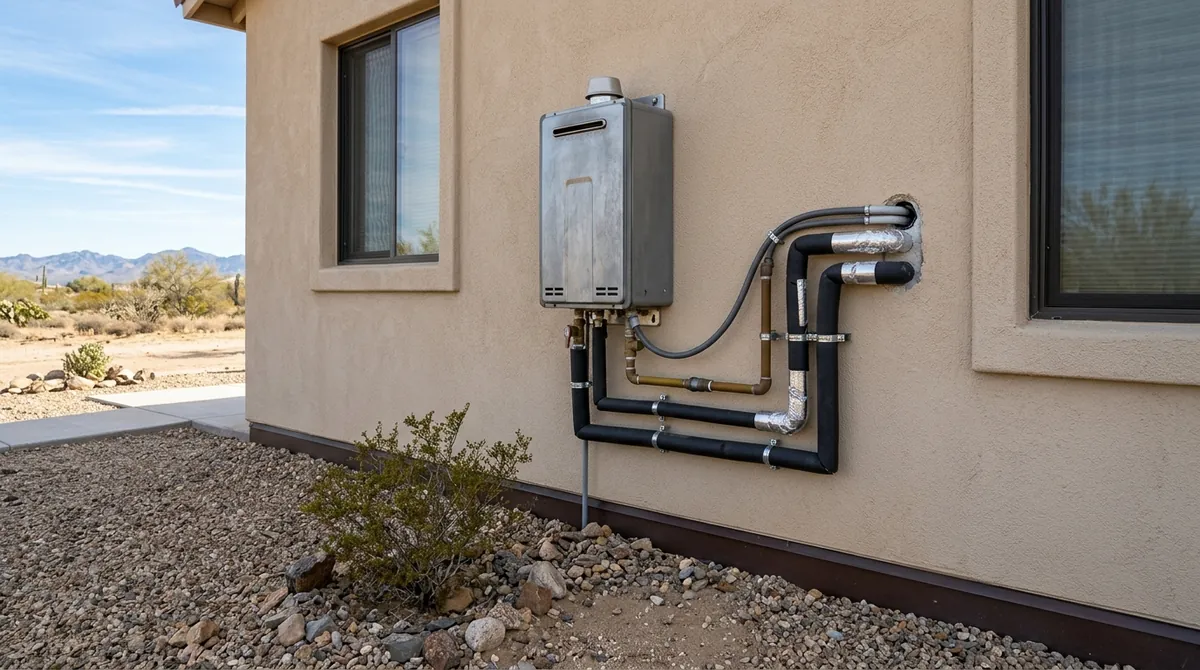
Moving the heater further from the bathrooms can lengthen the wait for hot water at the tap, so that is part of the location decision too.
Step 5: Plan for Hard Water
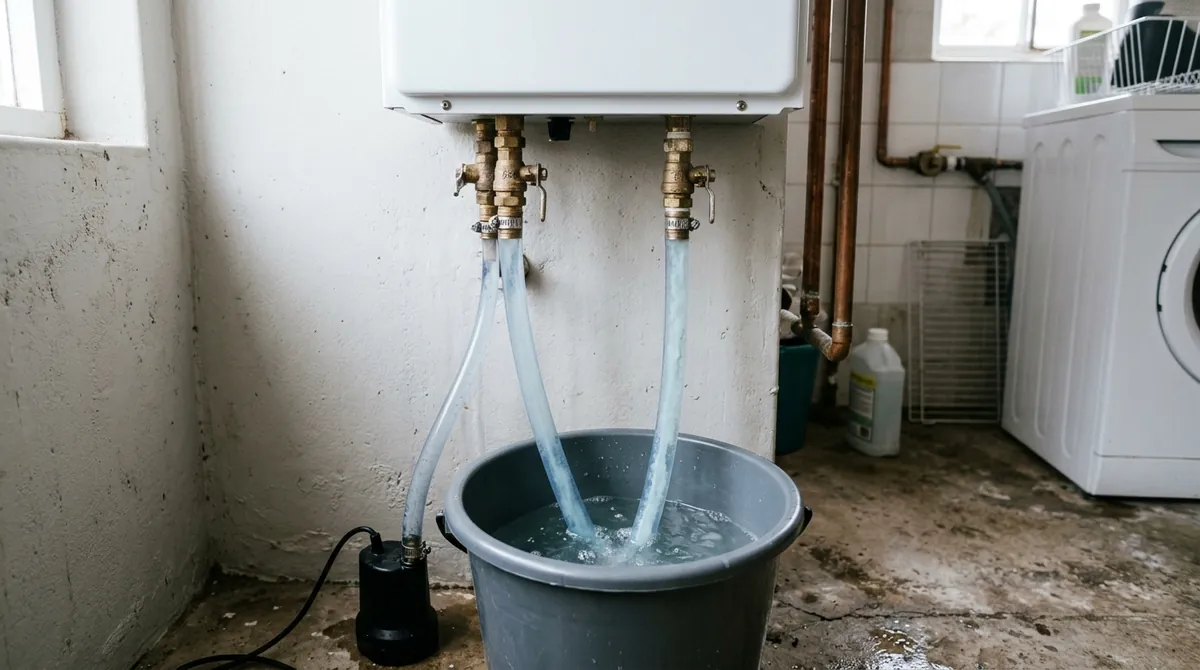
East Valley water is hard. In a tank, scale settles at the bottom. In a tankless unit, scale builds up inside the heat exchanger, where it cuts output and can trigger error codes.
There are two ways to protect the unit:
- Regular flushing. A tankless heater should be descaled on a schedule. Isolation valves installed with the unit make that a simple job.
- Water treatment. A water softener or whole-home treatment system reduces the scale reaching the heater and the rest of your plumbing.
Ask any installer whether isolation valves are part of the install. Without them, routine flushing gets much harder.
Tank vs Tankless at a Glance
| Tank replacement | Tankless conversion | |
|---|---|---|
| Hot water supply | Limited by tank size | Continuous, limited by flow rate |
| Space | Floor space in garage or closet | Wall-mounted, indoor or outdoor |
| Gas line | Usually reused as is | Often needs checking or upsizing |
| Venting | Existing flue reused | New venting, or an outdoor unit |
| Hard water care | Tank flushing | Heat exchanger descaling |
| Install scope | Mostly a swap | Gas, venting and water changes |
If you are still weighing a straight replacement, our water heater replacement cost guide covers what drives the price of both options.
What Moves the Cost
We don't publish prices, because a tankless conversion depends on the house. After a visit, you get a clear scope and estimate before work starts. These factors move the number most:
- Unit size and type. Indoor or outdoor, and how much output your household needs.
- Gas line work. Reusing the existing line versus upsizing or running a new one.
- Venting. Short wall venting, a roof run, or none for an outdoor unit.
- Location. Staying where the tank was is simpler than moving across the house.
- Water treatment. Adding a softener or filter at the same time.
- Permits. Gas and water heater work often needs one. Renova coordinates the permit for the plumbing scope when it's required. Check with your city for its own rules.
Questions to Ask Before You Switch
- How did you size the unit for my household?
- Is my gas line big enough, and how did you check it?
- Where will it vent, and does that location meet the clearances?
- Are isolation valves included for flushing?
- What maintenance does this unit need with our water?
Common Questions
Can my existing gas line handle a tankless water heater? Sometimes, but it has to be checked. A tankless unit draws much more gas at full output than a tank. The line's size, length and the other appliances on it decide whether it can stay or needs upsizing.
Is an outdoor tankless unit a good fit in Arizona? Often, yes. It frees the garage and skips indoor venting. The unit and its water connections need protection from direct sun, and exposed lines should be protected for the occasional cold night.
How often does a tankless heater need descaling here? It depends on your water and how much hot water you use. With East Valley hard water, plan on regular flushing. A softener or treatment system can stretch the time between flushes.
Talk Through Your Switch
If you are thinking about tankless, start with a look at your gas line, venting options and water. Our tankless water heater installation page explains how we plan and install the unit, and our water heater replacement page covers sticking with a tank.
Renova Plumbing & Drain serves Gilbert, Chandler, Mesa, Queen Creek, Tempe and Scottsdale. Call or text (602) 502-6843 or send us a message.