Get a sewer camera inspection when a drain problem keeps coming back, when several drains slow down at once, before you buy an older home, before a bathroom remodel, and before you pay for any major sewer or drain repair. In each case the camera replaces a guess with video of the inside of the pipe.
You don't need one for a single slow sink that clears and stays clear. This guide covers the seven situations where an inspection earns its cost in Gilbert, Chandler, Mesa, Queen Creek, Tempe and Scottsdale, what the footage can and can't tell you, and what to ask before you book one.
What a Sewer Camera Inspection Actually Shows
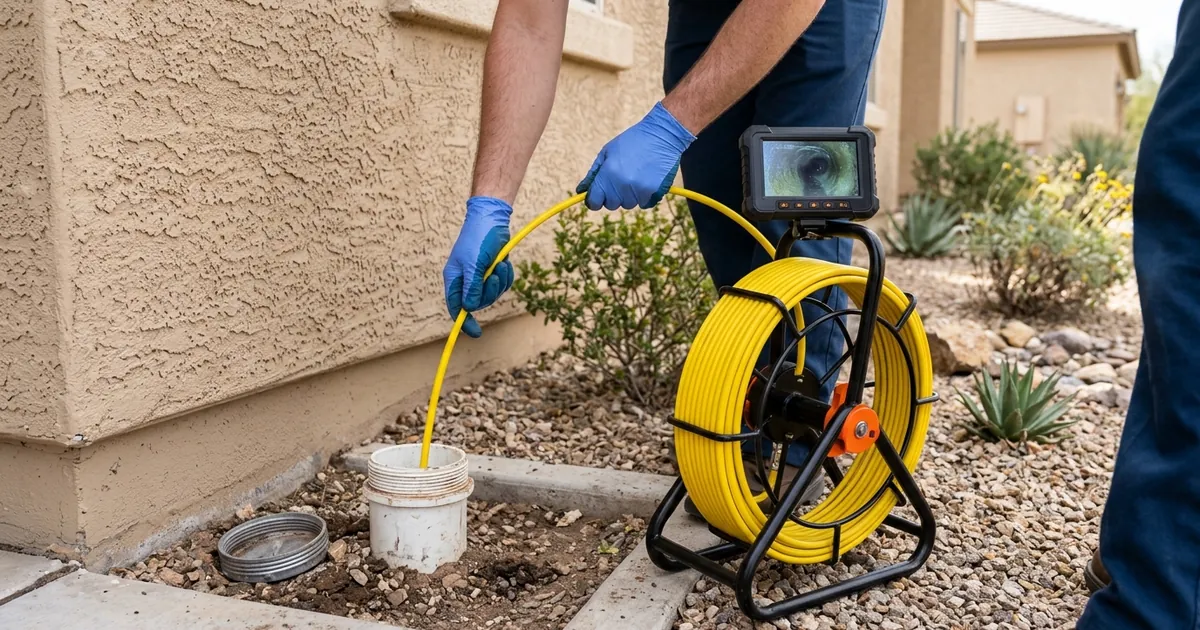
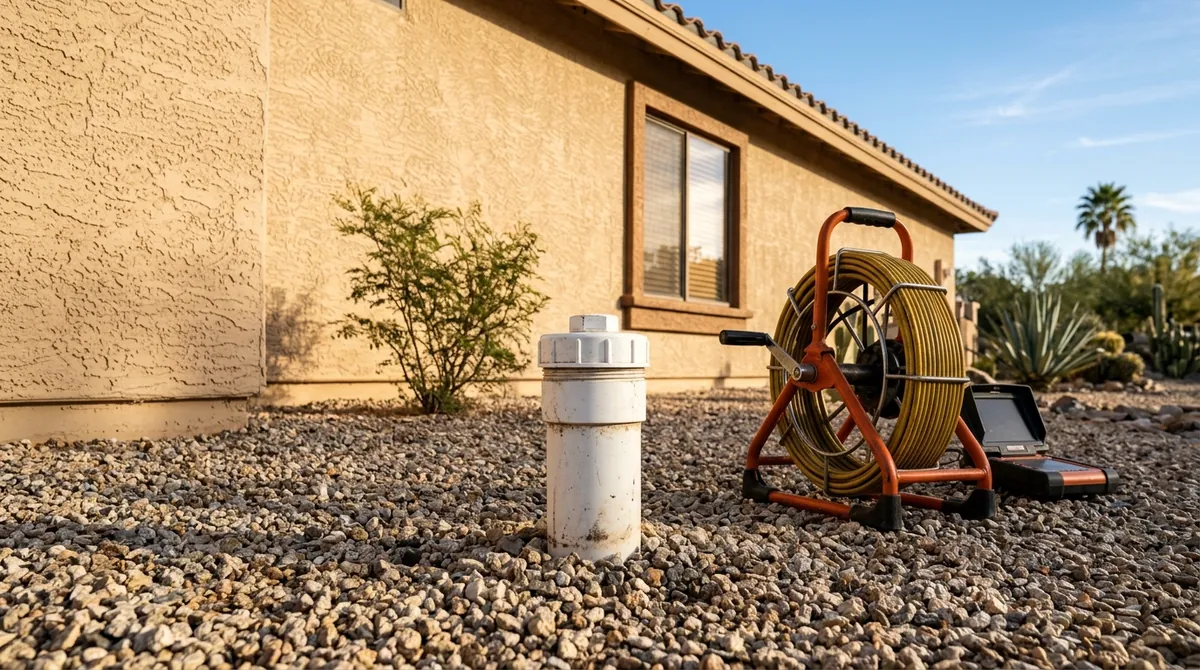
A sewer camera is a small waterproof camera on a flexible cable. It goes into the line through a cleanout, or through a toilet or drain opening when there is no cleanout, and records the inside of the pipe as it travels.
On the screen you can see:
- The pipe material. Cast iron, clay, ABS or PVC, and where one changes to another.
- Cracks and broken joints. Including the long cracks that form along the bottom of old cast iron.
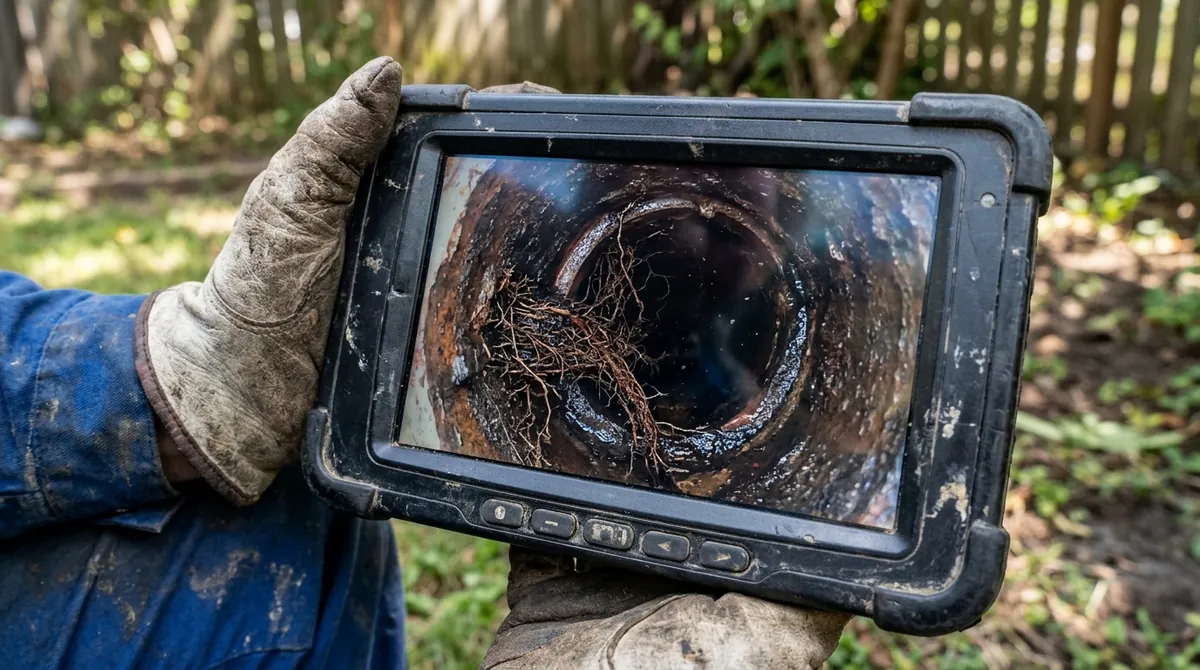
- Roots. Fine hair roots or a mass of them pushing in at a joint.
- Scale and buildup. Common in East Valley lines, where hard water leaves mineral deposits.
- Sags, or "bellies". Low spots where water and waste sit instead of draining.
- Blockages. Wipes, grease and debris, and what they are caught on.
A locator then picks up the camera's signal from above ground. That lets us mark where the line runs and how deep it is, so any repair opens the right spot instead of a guess.
1. A Clog Keeps Coming Back
A drain that backs up, gets cleared, then backs up again a few weeks later is telling you something. Clearing the line treats the symptom. The cause is usually something the clog keeps catching on: roots at a joint, a broken section, a sag or heavy scale.
The camera shows which one it is and exactly where it sits. That decides whether the answer is cleaning, a section repair or something bigger.
2. Several Drains Slow Down at Once
One slow sink is usually a local problem in that fixture's drain. When the toilets, tub and kitchen sink all slow down together, or a toilet gurgles when the washer drains, the trouble is more likely in the main line that they share.
That is a job for the camera. It travels the main line and shows whether the problem is a blockage, a break or a section of pipe that has settled.
3. You Are Buying an Older Home
A standard home inspection looks at the plumbing you can see. The American Society of Home Inspectors' Standard of Practice has inspectors check "Interior drain, waste, and vent systems, including fixtures", and says they are not required to inspect "Underground items including, but not limited to, underground storage tanks" (ASHI Standard of Practice).
The sewer line from the house to the street sits underground, so it is often outside a standard inspection unless you add a camera inspection. For homes built before about 1980, common in parts of Mesa, Tempe, south Scottsdale and north Chandler, the original line may be cast iron or clay. A video of that line shows its condition before you commit to the house.
Newer homes in Gilbert, Queen Creek and south Chandler usually have plastic drain lines, and most of them are fine. A camera inspection still makes sense if the house has had backups, has mature trees near the line, or sat empty for a long time.
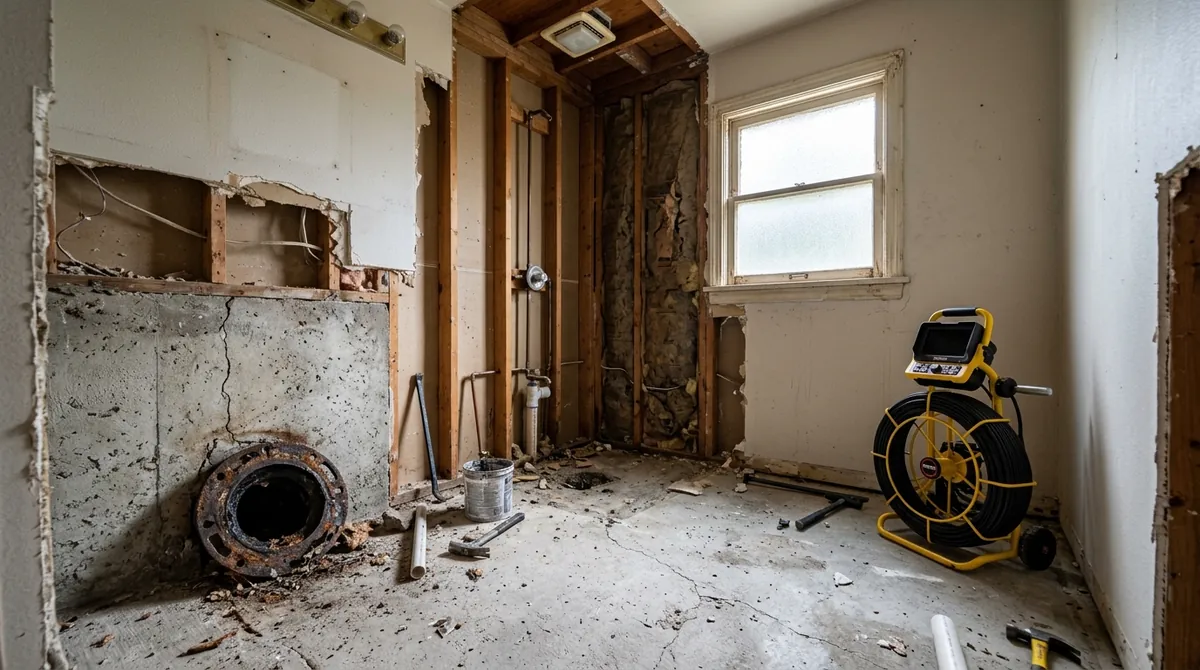
4. You Are Planning a Bathroom Remodel
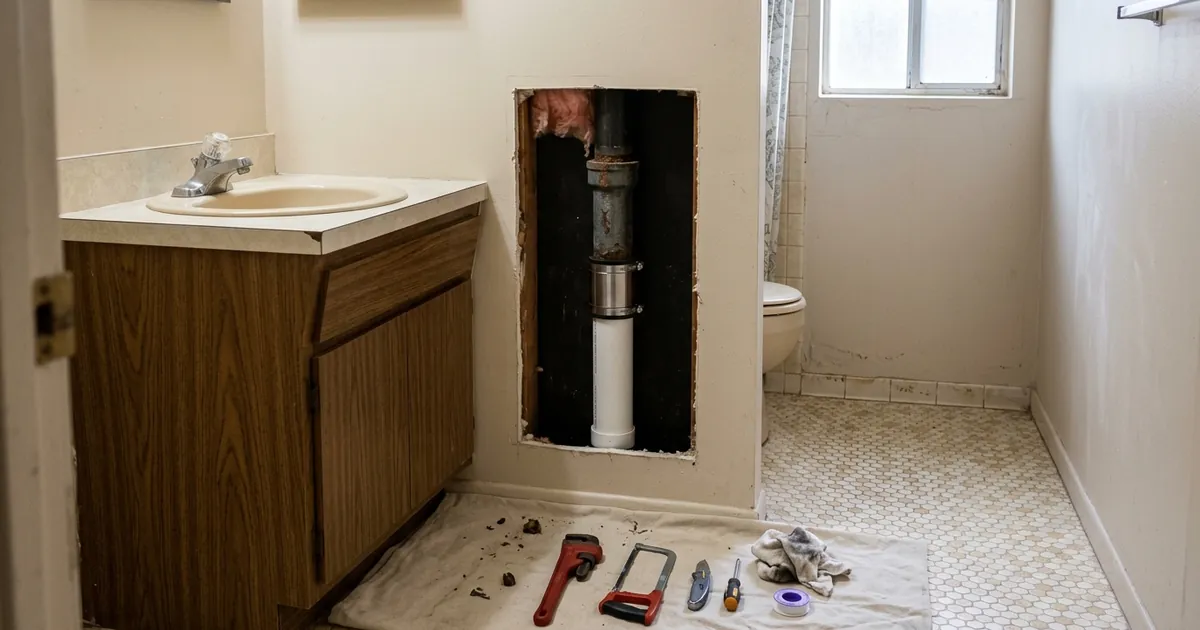
In an older home, the drains under the bathroom are often as old as the house. If they are failing, the time to find out is before new tile goes down, not after.
A camera inspection before demolition lets you plan any drain repair into the remodel budget. If the floor is coming up anyway, replacing a bad section then is far less disruptive than opening a finished floor later. That is why our older-home bathroom remodels start with the drains.
5. Someone Quoted You a Big Replacement
If you have been told the whole sewer line needs replacing, ask to see the footage. A replacement may be the right call. It may also be one damaged section in an otherwise sound pipe.
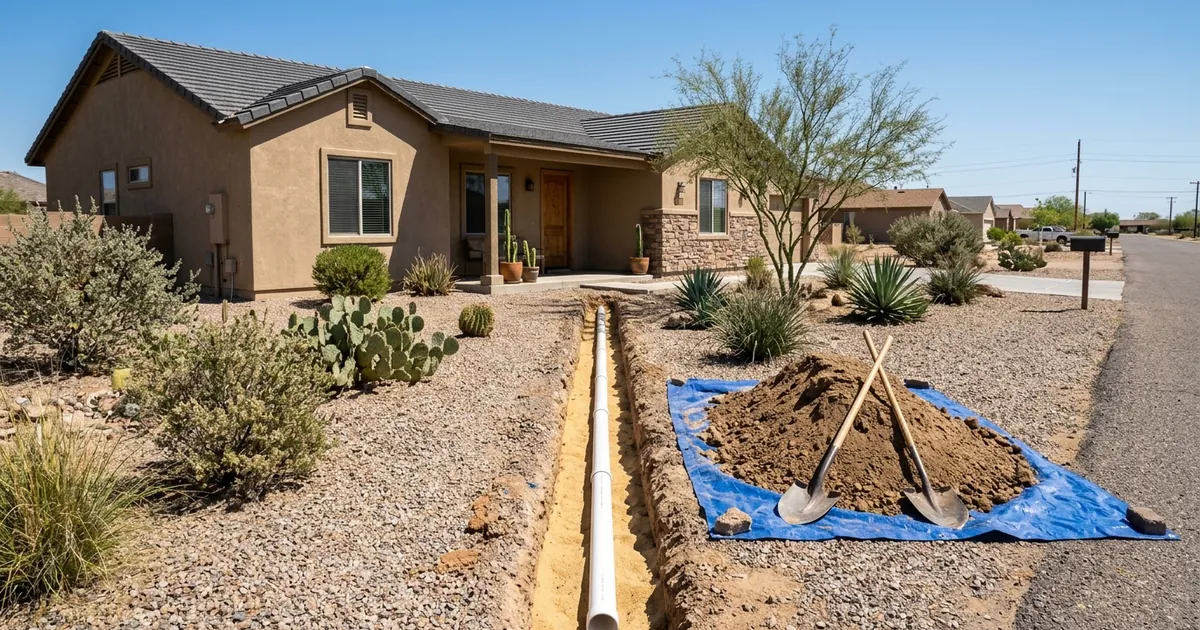
A second camera inspection costs far less than a line replacement, and it lets you see the damage for yourself. We'll show you what we find and tell you plainly if a section repair will hold, or if the line is failing along its length. Our guide to sewer line repair or replacement walks through how that decision gets made.
6. You Smell Sewer Gas and Can't Find the Source
A sewer smell with no obvious cause, such as a dry trap in a spare bathroom, can come from a crack or failed joint you can't see. Under a slab or in a wall, it is very hard to trace from the room above.
The camera can show a break, a separated joint or a section of pipe that has rotted through. Locating then pins down where it is under the floor.
7. After a Repair, to Check the Work
A camera run after a repair confirms the new section is aligned, the joints are clean and water flows the way it should. It is also worth doing after a line has been cleared of heavy roots, to see the pipe underneath and whether the roots got in through a break.
When You Probably Don't Need One
Not every drain problem needs a camera. You can usually skip it when:
- One fixture drains slowly and clears for good once the trap is cleaned.
- The clog has an obvious cause, like a toy in a toilet, and doesn't come back.
- A newer home has no history of backups and you aren't buying, selling or remodeling.
If the problem returns, that is the point where an inspection starts to pay for itself.
What Affects the Cost
We don't publish prices, because every line is different. You get a clear price before we start. These are the things that change the job:
- Access to the line. An easy-to-reach cleanout is simplest. No cleanout means entering another way.
- Blockage in the pipe. A line too blocked for the camera may need clearing first.
- Length of the run. A longer path from the house to the street takes more time to film.
- Locating. Marking the path and depth for a planned repair adds a step.
- Recorded footage. Ask if you want the video to keep for a sale, a remodel or your records.
Most inspections take about an hour, including locating, and you see the results before we leave.
Questions to Ask Before You Book
- Will I watch the footage with you, and can I keep a copy?
- Will you locate the line and mark the depth if you find a problem?
- What happens if the line is too blocked for the camera?
- If you find damage, will you show me exactly where and how much of the pipe it affects?
- If the pipe is sound, will you tell me that?
That last one matters most. A camera inspection is only useful if the person reading the footage is willing to tell you nothing needs doing.
Common Questions
How long does a sewer camera inspection take? Usually about an hour, including locating the line from above. It takes longer if the pipe needs clearing before the camera can pass, or if there is no cleanout and the camera goes in another way.
Does a home inspection include the sewer line? Often not. Standard home inspections cover the visible plumbing, and the buried sewer line is usually outside that scope unless a camera inspection is added. Check what your inspector's agreement includes.
Can a camera inspection find roots in the line? Yes. Roots show up clearly on video, from fine hair roots at a joint to a mass that blocks the pipe. The footage also shows whether they came in through a crack or a loose joint, which decides the repair.
See Inside the Pipe Before You Decide
If you are dealing with repeat clogs, buying an older home or planning a remodel, start with the camera. Our sewer camera inspection and locating service shows you the footage on the spot, with a straight recommendation in plain language. When the camera finds a failing line, see drain line replacement and main sewer line replacement.
Renova Plumbing & Drain serves Gilbert, Chandler, Mesa, Queen Creek, Tempe and Scottsdale. Call or text (602) 502-6843 or send us a message.