If your older home has cast iron drains, you usually don't have to choose between doing nothing and replacing every pipe. A section repair makes sense when the camera shows one damaged spot in an otherwise sound line, and full replacement makes sense when the pipe is worn thin, scaled or cracked in several places.
The footage decides it, not the age of the house alone. This guide walks through what each option involves, the signs that point one way or the other, and the questions to ask before you agree to either.
Why Older East Valley Homes Have Cast Iron Drains
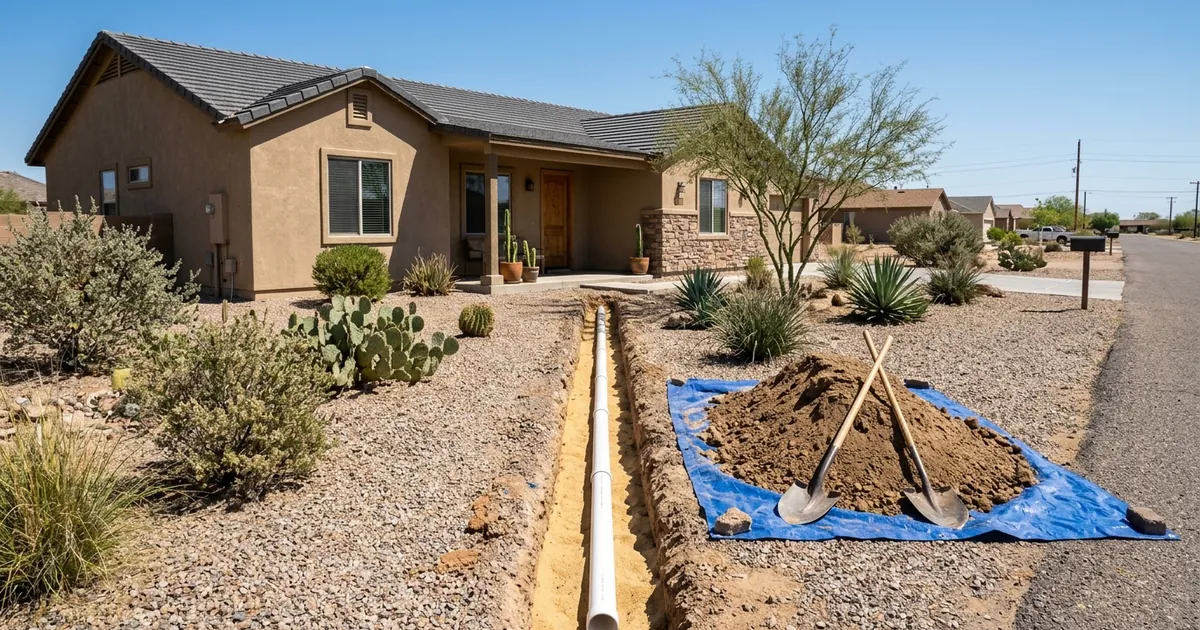
Cast iron was the standard drain pipe for homes built before about 1980. Across the East Valley, that means much of west and central Mesa, north and central Tempe, south Scottsdale and north Chandler. In most of these homes, the drains run under a concrete slab.
Insurance Journal, reporting on cast iron drain pipe insurance claims, describes the pipe as "common in homes built before 1975" and notes it "may develop deposits on the inside that can constrict the flow of drain water" (Carrier Management / Insurance Journal).
That inside-out wear is the key point. Cast iron can look solid at a cleanout while the bottom of the pipe further along is thin, scaled or cracked.
What Wears Cast Iron Down
Cast iron is strong pipe, and plenty of it is still working after decades. A few things shorten its life:
- Corrosion from the inside. Wastewater and the gases in a drain rust the pipe wall, starting along the bottom where water sits.
- Scale buildup. East Valley water is hard, and mineral scale narrows the pipe and gives debris something to catch on.
- Channel rot. The bottom of a horizontal run can erode into a long crack while the top still looks fine.
- Ground movement. Soil settling under a slab can crack a joint or create a low spot where waste collects.
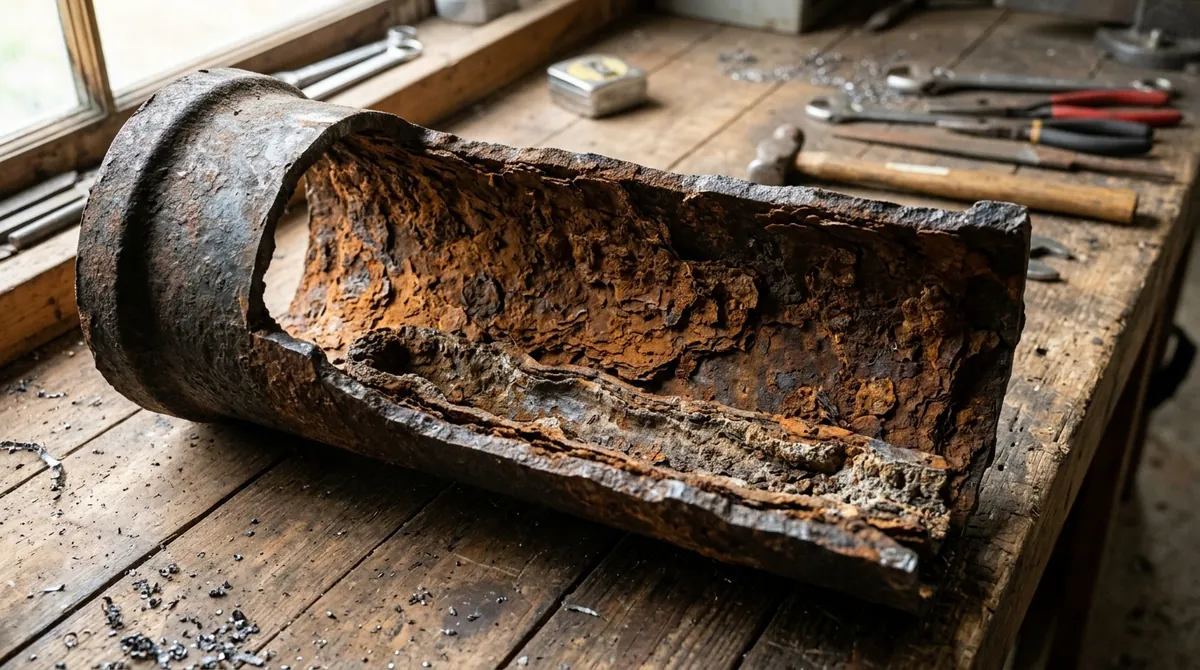
Because these problems build slowly, two homes of the same age can have very different drains.
When a Section Replacement Makes Sense
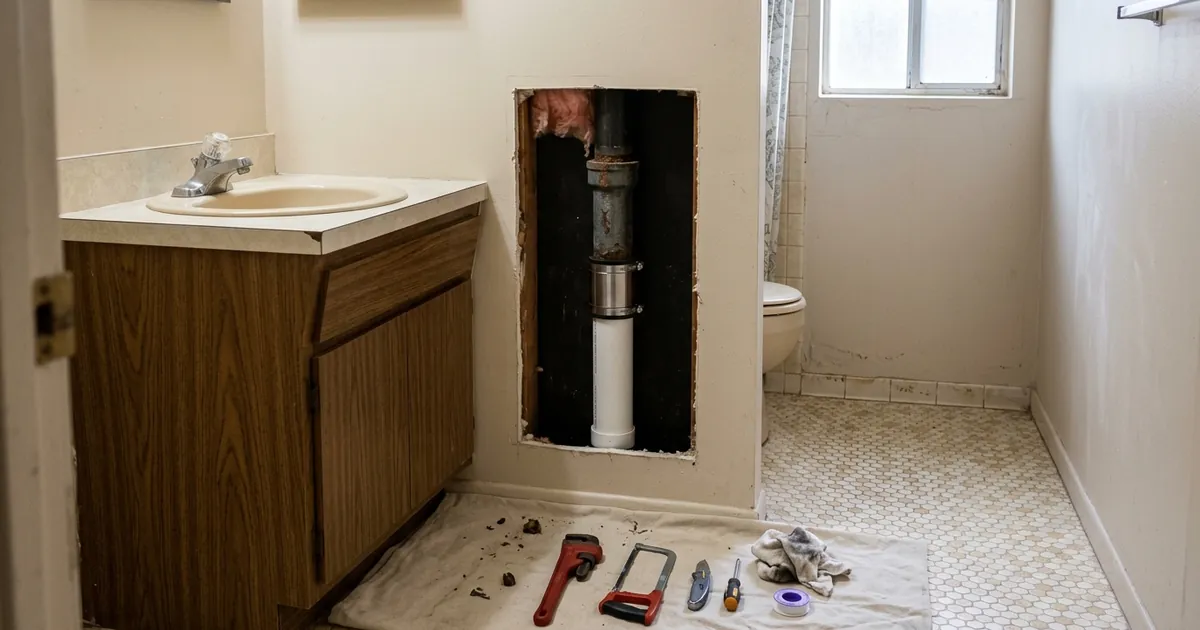
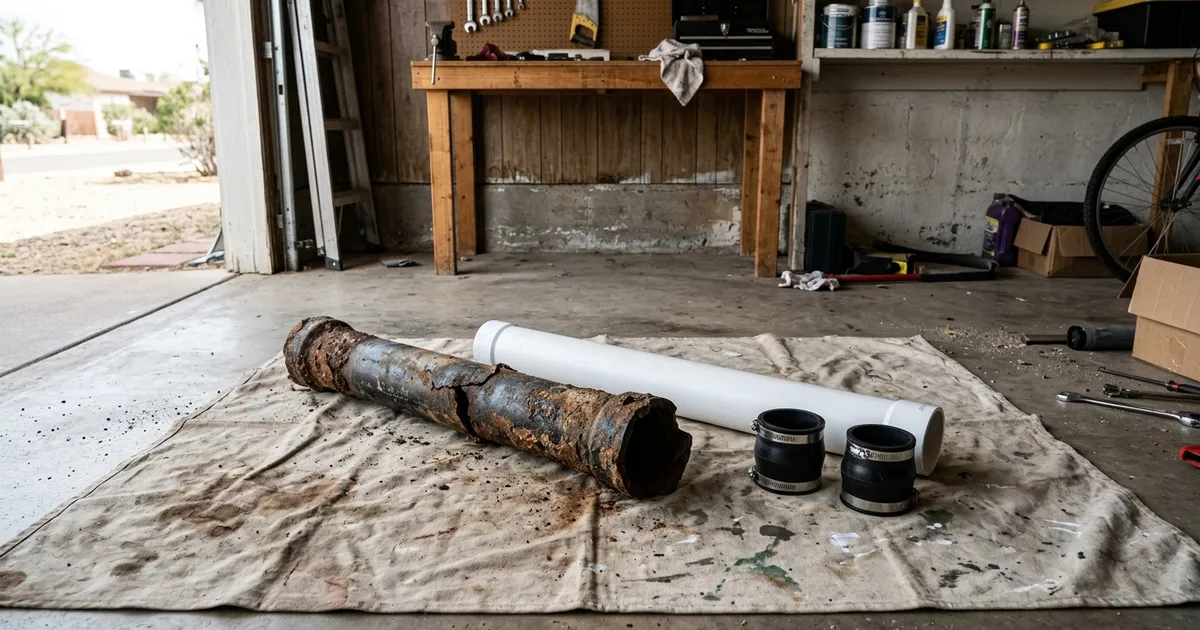
A partial repair cuts out the failed piece and joins new PVC or ABS pipe to the sound cast iron on either side, using proper transition fittings.
It usually fits when:
- The camera shows one break, crack or sag, and the rest of the line has smooth walls and good slope.
- The damage is in an easy spot to reach, such as a cleanout, a garage wall or a short run near the edge of the slab.
- A specific event caused it, such as a root intrusion at one joint or a line damaged during other work.
- You plan a larger remodel later and want a sound fix now, with the rest of the system planned into that project.
What to keep in mind:
- The remaining cast iron keeps aging. A section repair solves today's problem, not the next one.
- Each new joint between old and new pipe has to be supported and tested.
- If the camera shows the pipe is thin elsewhere, a patch can turn into several patches within a few years.
When Full Replacement Makes Sense
Full replacement swaps the cast iron for new plastic drain pipe throughout the house, or throughout one branch at a time. It is often done in phases, room by room.
It usually fits when:
- The camera shows scale, pitting or channel rot along most of the run, not just one spot.
- You have already had more than one section repaired.
- Several drains back up or slow down together, which points to the shared line under the floor.
- A bathroom or kitchen remodel is opening the floors anyway.
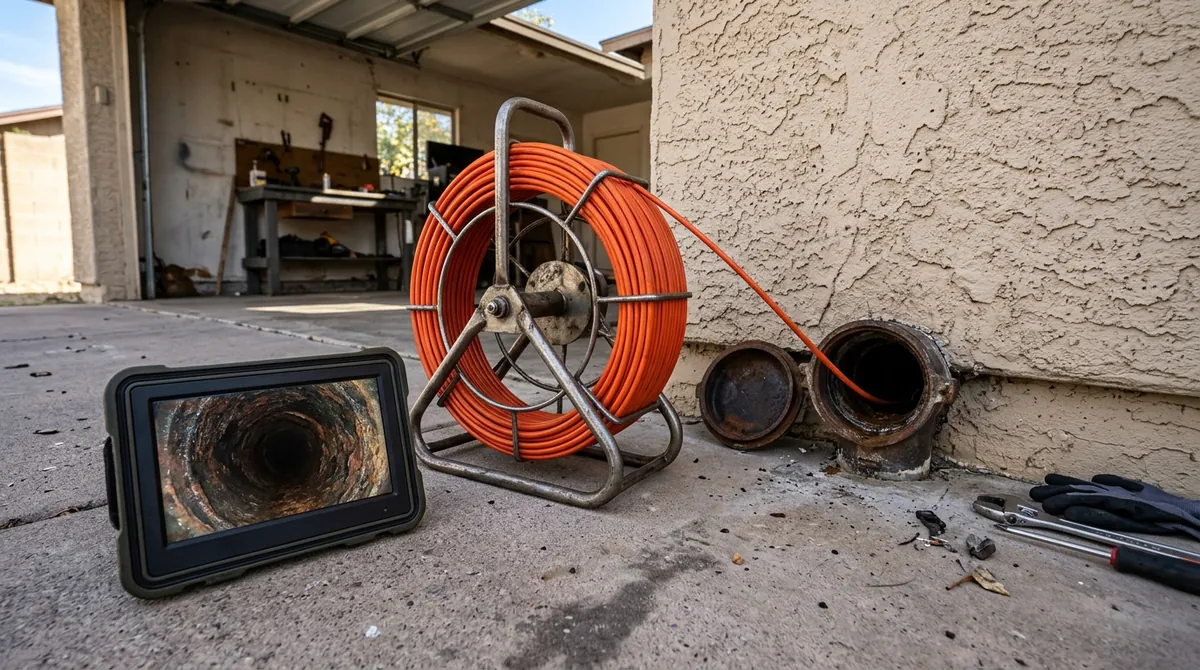
What to plan for:
- More access work, whether that is cutting the slab, tunneling from outside or rerouting the line. Our guide to broken drains under the slab explains those three options.
- Floor and wall restoration where the pipe is reached.
- A schedule. Larger jobs are scoped up front and can be phased so the house stays usable.
Side by Side
| Section replacement | Full replacement | |
|---|---|---|
| Best for | One damaged spot in a sound line | Wear along most of the system |
| Disruption | Small, local | Larger, often phased |
| What remains | Older cast iron elsewhere | All new drain pipe |
| Main risk | The next weak spot fails | More upfront work and restoration |
| Good time to do it | A single failure, or before a planned remodel | Repeat failures, or during a remodel |
Why a Remodel Changes the Math
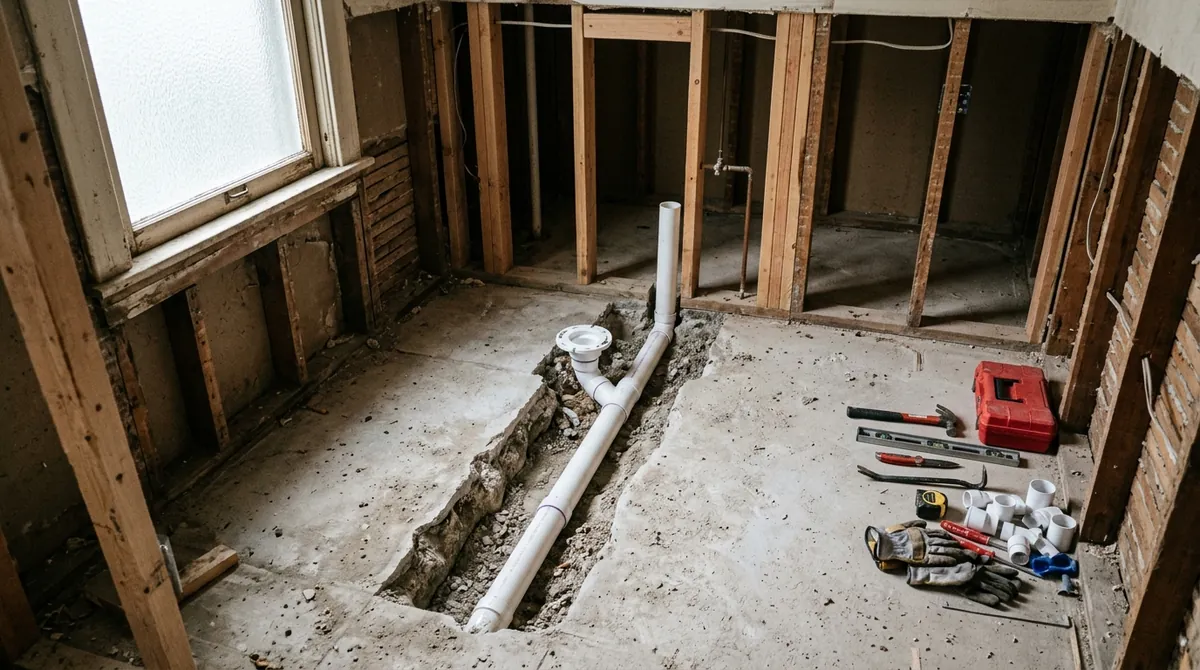
If you are planning a bathroom remodel in an older home, the cast iron question comes first. Once new tile and a new shower pan go in over old drains, a later repair means tearing out finished work.
Replacing the cast iron under a bathroom while the floor is already open is the least disruptive time to do it. That is the reason Renova handles older-home bathroom remodels and drain work as one project: the plumbing behind the tile gets checked before the tile goes down.
What Affects the Cost
We don't publish prices, because cast iron work depends on what the camera finds and where the pipe runs. After an inspection, you get a clear scope and estimate before any work starts. These factors move the number most:
- How much pipe is replaced. One section is a very different job from every drain in the house.
- Where the pipe runs. Under a slab, inside a wall or along a garage each need different access.
- The access method. Cutting the floor, tunneling and rerouting carry different labor.
- Finishes above the pipe. Tile, wood floors and cabinets add restoration work.
- Permits. Drain replacement often needs one. Renova coordinates the permit for the plumbing scope when it's required. Check with your city for its own rules.
Free visual estimates are available. If diagnosing the problem needs a camera or testing, a diagnostic fee may apply.
Questions to Ask Before You Decide
These questions help you compare recommendations fairly:
- Can I watch the camera footage, and where exactly is the damage?
- How does the rest of the line look compared with the damaged section?
- If we only replace one section, what condition is the pipe on either side?
- Which access method fits my house, and why?
- Will the new pipe be tested before anything is closed up?
- If I'm planning a remodel, should the drains be done first?
A plumber who recommends full replacement without showing you the footage, or a patch without explaining what is left behind, is giving you half the picture.
Common Questions
How do I know if my house has cast iron drains? If your home was built before about 1980, it probably does. Heavy black or rust-colored pipe at a cleanout, in the garage or under a sink is a good clue. A camera inspection confirms the material and condition throughout the system.
Can one section of cast iron be replaced with PVC? Yes. A failed section can be cut out and joined to sound cast iron with transition fittings made for the job. It works well when the rest of the line is in good shape, and the camera is how you find that out.
Does all the cast iron in my house need to come out? Not always. Sound cast iron can stay in service. Full replacement is worth it when the camera shows wear along most of the line, when repairs keep repeating, or when a remodel already has the floors open.
Start With the Camera
If your older home has slow drains, repeat clogs or a sewer smell you can't trace, the first step is seeing inside the pipe. Our cast iron drain replacement page explains how we inspect, recommend and replace, and our sewer camera inspection shows you what the footage covers. When the problem is a newer plastic line, see drain line replacement.
Renova Plumbing & Drain serves Gilbert, Chandler, Mesa, Queen Creek, Tempe and Scottsdale. Call or text (602) 502-6843 or send us a message.